Indoor potting soil behaves very differently from these natural habitats. Many general-purpose potting mixes are designed to retain moisture for extended periods, which can create dense conditions that slow oxygen movement around the root zone. When soil remains saturated for long periods, philodendron roots may struggle to function efficiently.
Chunky aroid soil mixes help solve this problem by maintaining structural space inside the pot. Larger particles prevent compaction and allow water to move through the container more freely after watering. This balance between drainage and moisture retention helps replicate the natural root conditions philodendrons evolved to grow in.
For many indoor growers, this type of soil structure makes watering easier, improves root health, and reduces the risk of common houseplant problems caused by soil staying wet too long.
Read: Rainbows & Unicorns authority page →
Buy Rainbows & Unicorns (pack sizes) →
Understanding Philodendron Root Biology
Philodendrons belong to the Araceae plant family, which contains many tropical climbing plants that grow in humid rainforest environments. In nature, philodendrons rarely grow in dense mineral soil like traditional garden plants. Instead, their roots develop within loose layers of organic material such as bark fragments, decomposing leaves, moss, and other forest debris.
These environments share several important characteristics that influence how philodendron roots function.
- Root zones contain large air spaces between organic materials.
- Rainwater drains quickly through loose debris.
- Oxygen is constantly available around the roots.
- Moisture remains present but rarely stagnant.
This natural structure creates a highly aerated environment that supports rapid root growth while still providing steady hydration.
Because philodendron roots evolved under these conditions, they often perform best when indoor soil structures mimic similar characteristics. Soil that maintains airflow while draining efficiently tends to produce stronger root systems and more stable growth.
When philodendrons are grown in compact soil environments, oxygen movement around the roots decreases. Over time, this can slow growth and make the plant more vulnerable to overwatering mistakes.
Philodendrons belong to the Araceae plant family, a group of tropical plants widely studied in botanical literature. According to research on tropical aroid ecology, these plants evolved in highly aerated organic debris layers rather than compact soil environments.
Additional information on aroid plant structure can be found through botanical references such as
Philodendron taxonomy and biology and the Araceae plant family.
Why Soil Structure Matters for Philodendron
Soil does far more than simply hold a plant upright. The structure of the potting mix determines how water moves through the container, how oxygen reaches the roots, and how efficiently the plant absorbs nutrients.
Dense soil structures slow drainage and reduce the amount of air available inside the pot. As watering cycles repeat, fine soil particles may settle and compact even further. This process gradually reduces airflow and increases the time that water remains trapped in the container.
For philodendrons grown indoors, these conditions can make watering more difficult to manage. Soil may appear dry at the surface while remaining saturated deeper in the container.
Chunky soil structures prevent this problem by maintaining open spaces between soil particles. These air pockets allow oxygen to circulate throughout the root zone and help water exit the pot more efficiently after watering.
Maintaining this structural stability over time allows philodendron roots to grow more naturally and makes watering cycles easier to predict.
What Philodendron Soil Needs to Provide
An effective philodendron soil mix balances several key characteristics that influence root health. Instead of focusing on a single factor such as drainage, the soil must maintain a balance between aeration, moisture retention, and structural stability.
Four primary characteristics define a strong philodendron soil mix.
- Aeration — Roots require oxygen to support metabolic processes and healthy growth.
- Drainage — Excess water should move freely through the container and exit through drainage holes.
- Moisture retention — Soil must still hold enough water to hydrate the plant between watering cycles.
- Structural stability — Soil components should resist compaction and maintain airflow over time.
When these characteristics are balanced correctly, philodendrons tend to develop stronger root systems and maintain healthier foliage growth indoors.
Structured aroid soil blends are designed specifically to maintain this balance. By combining multiple soil components with different functions, these mixes create a stable root environment that supports long-term plant health.
How Natural Forest Substrate Influences Indoor Soil Design
One of the best ways to understand philodendron soil preferences is to look at the environments where these plants grow naturally. Tropical rainforests contain complex layers of organic debris that accumulate around trees and across the forest floor.
This debris includes materials such as bark fragments, decomposing leaves, plant fibers, and other organic matter. Rainfall moves quickly through these layers, preventing water from remaining stagnant while still leaving behind moisture that plants can absorb.
The resulting environment is highly aerated, biologically active, and constantly replenished with organic material.
Indoor soil mixes attempt to replicate these conditions by combining structural materials with moisture-retentive ingredients. Larger components maintain airflow while organic materials store water between watering cycles.
The result is a soil environment that behaves more like natural forest substrate than dense garden soil, which is why chunky aroid mixes are commonly recommended for philodendron plants grown indoors.
Why Regular Potting Soil Often Causes Problems for Philodendron
Many houseplant owners begin growing philodendrons using general-purpose potting soil. While these mixes are widely available and marketed for indoor plants, they often behave differently than the root environments philodendrons naturally grow in.
Most standard potting soils rely heavily on fine organic particles such as peat moss, composted forest products, or similar materials designed to retain moisture. These ingredients are excellent for holding water, but they can also compact over time inside a container.
As watering cycles repeat, these small particles settle closer together and reduce the amount of air space within the soil. This process gradually slows drainage and decreases oxygen availability around the roots.
For philodendrons, which evolved in loose tropical environments filled with bark fragments and organic debris, this type of dense soil structure can create conditions that stay wet longer than the plant prefers.
Several issues may appear when philodendrons grow in soil that holds too much moisture.
- Soil stays wet for extended periods after watering.
- Airflow around roots decreases.
- Drainage slows as the soil compacts.
- Water accumulates in the lower portion of the pot.
- Roots may weaken or become stressed.
While philodendrons are generally tolerant plants, consistently saturated soil can eventually lead to reduced growth and make watering mistakes more likely.
This is why many indoor growers prefer structured aroid-style substrates that maintain airflow and drainage throughout the container.
What Chunky Aroid Soil Means for Philodendron
Chunky aroid soil refers to potting mixes that use larger structural ingredients to maintain airflow and drainage inside the container. Instead of forming a dense mass of fine particles, these mixes create small air pockets throughout the root zone.
These air pockets allow oxygen to move through the soil more easily while also helping water pass through the pot after watering. The result is a root environment that remains hydrated but rarely becomes stagnant.
This type of soil structure closely resembles the loose organic environments where many philodendron species naturally grow. In tropical forests, these plants often climb trees while their roots grow through layers of bark fragments, decomposing leaves, and other organic material.
Because those environments contain large air spaces and rapid drainage, philodendron roots are adapted to soil conditions where oxygen remains readily available.
Chunky aroid mixes attempt to recreate this type of root environment inside a container. By maintaining structural space between soil components, the mix allows roots to expand freely while still providing stable moisture levels.
This structure also tends to remain stable longer than fine-textured soils, which can compress over time.
Common Ingredients Used in Philodendron Soil Mixes
Many philodendron soil mixes combine multiple ingredients that each contribute a specific function within the potting mix. Rather than relying on a single material, structured substrates use a combination of components that balance aeration, drainage, and moisture retention.
Some of the most common ingredients found in philodendron soil mixes include:
- Orchid bark – provides long-lasting structure and creates air pockets throughout the soil.
- Pumice – improves drainage and helps prevent compaction.
- Perlite – increases aeration while keeping the mix lightweight.
- Coco coir – retains moisture while remaining more airy than peat-based soils.
- Coco chips – add chunkiness while holding water inside their fibrous structure.
- Horticultural charcoal – contributes structural stability and can help maintain soil freshness.
- Organic nutrients – materials such as worm castings provide mild nutrient support.
When combined correctly, these materials create a balanced soil environment where water moves efficiently while roots still receive steady hydration.
Understanding the role each ingredient plays can help growers adjust soil structure to match their specific indoor conditions.
How Soil Ingredients Work Together in Aroid Mixes
A strong philodendron soil mix depends on the interaction between different materials rather than any single ingredient. Each component contributes to how the soil handles water movement, oxygen availability, and long-term stability.
Structural ingredients such as bark and coco chips maintain large air pockets throughout the soil. These pockets allow oxygen to move through the container and help prevent soil from collapsing into dense material.
Mineral components such as pumice and perlite help improve drainage and distribute water evenly throughout the pot. Because these materials do not break down quickly, they help preserve the soil’s structure for longer periods.
Moisture-retentive ingredients such as coco coir help the mix hold enough water between watering cycles so the plant remains hydrated.
When these materials are combined correctly, they create a balanced soil system where water, oxygen, and nutrients move efficiently around the roots.
This balance between drainage and moisture stability is one of the reasons structured aroid mixes are commonly recommended for philodendron plants grown indoors.
How Chunky Soil Improves Watering Control
One of the biggest advantages of chunky soil mixes is how they change watering behavior within the container.
In dense potting soil, water may move slowly through the pot and remain trapped in lower layers. This can create uneven moisture levels where the surface appears dry while deeper soil remains saturated.
Chunky mixes behave differently because larger particles allow water to move more freely between them. When the plant is watered, moisture spreads evenly through the soil before draining from the bottom of the container.
This creates a more predictable watering cycle that helps growers avoid common problems associated with overwatering.
- Water distributes more evenly through the root zone.
- Excess water exits the container more quickly.
- Roots remain hydrated without becoming submerged.
- Dry-down periods become easier to monitor.
These characteristics allow philodendron growers to maintain healthier watering routines while supporting strong root growth.
When soil structure and watering technique work together, philodendrons typically produce stronger foliage and more vigorous growth indoors.
How Your Indoor Environment Affects Philodendron Soil
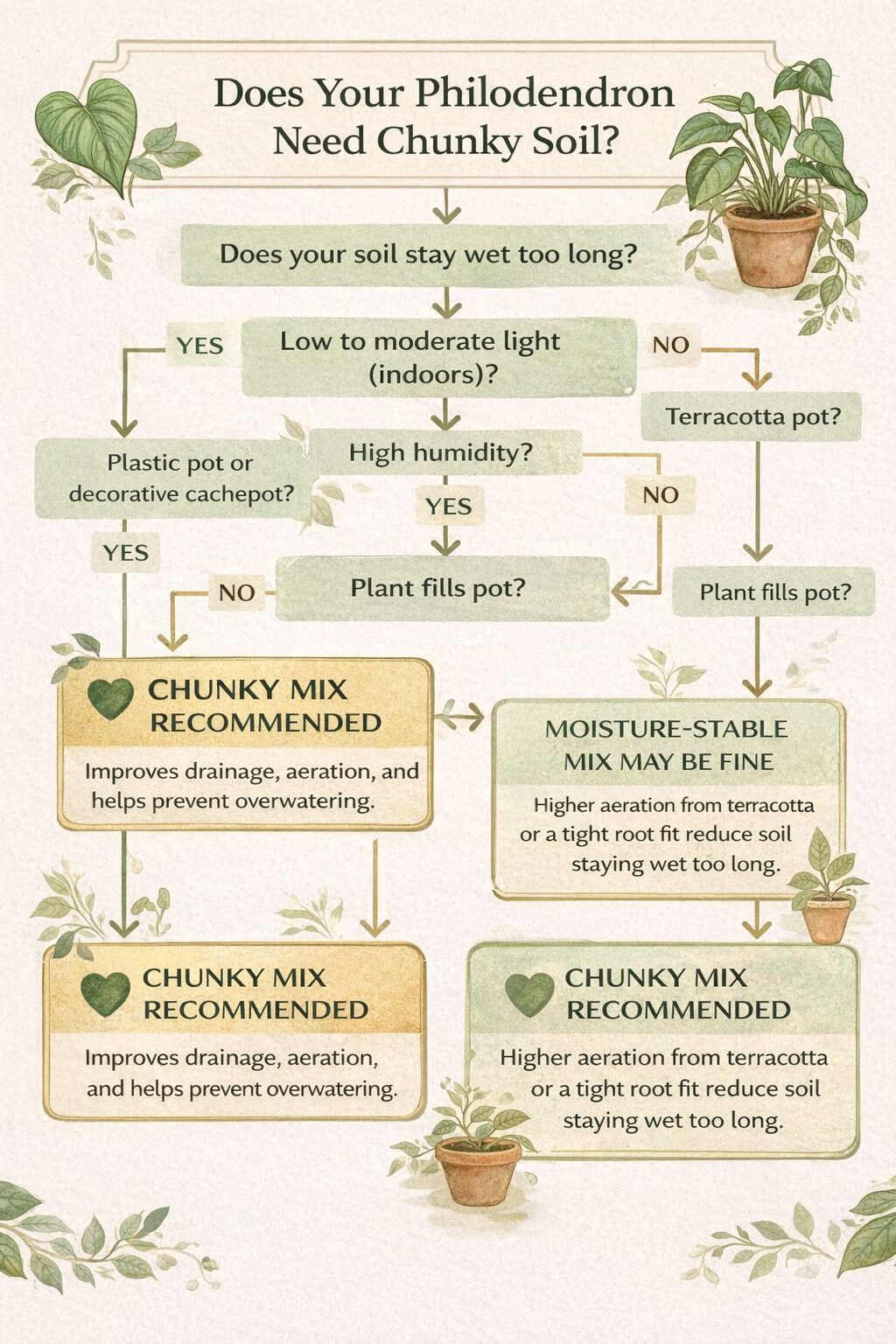
The best soil for philodendron depends not only on the ingredients in the mix but also on the environment where the plant is growing. Indoor conditions vary significantly from one home to another, and these differences affect how quickly soil dries and how the plant uses water.
Several environmental factors influence how philodendron soil behaves inside a container.
- Light intensity
- Air circulation
- Indoor humidity
- Temperature
- Pot size relative to the root ball
Philodendrons growing in bright indirect light typically use water faster and may dry out more quickly than plants growing in lower light. In contrast, plants placed in moderate or low light often use water more slowly, which means soil remains moist for longer periods.
Humidity and airflow also influence how quickly water evaporates from the soil surface. Homes with dry air and strong airflow may cause soil to dry faster, while humid environments may keep soil moist for longer periods.
Because of these differences, the goal when choosing philodendron soil is not simply to create the fastest-draining mix possible. Instead, the goal is to create a balanced root environment where moisture remains available while oxygen can still move freely through the soil.
Choosing the Right Pot for Philodendron
The container you choose has a significant influence on how soil behaves. Different pot materials affect evaporation, airflow, and overall moisture retention.
Three of the most common pot materials used for philodendrons are terracotta, plastic, and glazed ceramic.
Terracotta Pots
Terracotta is a porous clay material that allows moisture to evaporate through the sides of the pot. This increased evaporation helps soil dry faster and improves airflow around the root zone. Terracotta can be helpful for growers who tend to overwater or who live in humid environments.
Plastic Pots
Plastic containers retain moisture longer because the material does not allow evaporation through the pot walls. This can be beneficial in dry environments or homes with strong airflow that causes soil to dry quickly.
Glazed Ceramic Pots
Glazed ceramic pots behave similarly to plastic containers because the glaze prevents moisture from escaping through the pot walls. These pots are often heavier and can provide additional stability for larger philodendron plants.
No matter which container you choose, drainage holes are essential. Pots without drainage holes make it difficult for excess water to leave the container and increase the risk of root rot.
How to Water Philodendron in Chunky Soil
Even when using the best soil for philodendron, watering technique still plays an important role in maintaining healthy roots. Chunky aroid mixes are designed to improve drainage, but proper watering practices ensure the soil functions as intended.
The most reliable approach is to water thoroughly and then allow the soil to partially dry before watering again.
- Water until excess moisture exits the drainage holes.
- Allow excess water to drain completely.
- Wait until the mix reaches the appropriate moisture level before watering again.
Chunky soil mixes make this process easier because water moves evenly through the pot rather than remaining trapped in dense soil layers.
This more predictable behavior helps growers avoid overwatering and makes it easier to observe when the plant actually needs water.
Signs Your Philodendron Soil Needs Improvement
If a philodendron is growing in soil that holds too much moisture or has become compacted, the plant will often display warning signs that the root environment is not functioning properly.
Common indicators that the soil structure may need improvement include:
- Soil remains wet for several days after watering.
- Leaves begin to yellow unexpectedly.
- Growth slows despite adequate lighting.
- Roots appear brown or soft during repotting.
- The soil surface becomes compacted or crusted.
These symptoms often occur when oxygen levels around the roots decrease due to soil staying saturated for extended periods.
Repotting the plant into a structured aroid soil mix can significantly improve root conditions and help restore healthy growth.
When to Repot Philodendron Plants
Philodendrons benefit from repotting when the plant begins to outgrow its container or when the soil structure starts to break down over time.
Even well-designed soil mixes gradually decompose as organic components break down. As this occurs, the soil may begin to hold more water and lose some of its original aeration.
Most philodendrons benefit from repotting every one to two years depending on growth rate and pot size.
Signs that repotting may be necessary include:
- Roots circling around the inside of the pot.
- Roots emerging from drainage holes.
- Soil drying extremely quickly after watering.
- Overall plant growth slowing noticeably.
Replacing old soil with fresh structured mix restores aeration and improves drainage throughout the root zone.
FAQs About Philodendron Soil
Do philodendrons like chunky soil?
Many indoor growers prefer chunky aroid-style mixes because they provide better aeration and drainage compared to dense potting soil. This structure allows oxygen to reach the roots while still maintaining balanced moisture levels.
Can I grow philodendron in regular potting soil?
Philodendrons can grow in regular potting soil, but dense soils increase the risk of overwatering indoors. Many growers prefer structured aroid mixes that drain faster and maintain airflow around the roots.
What soil ingredients are best for philodendron?
Common philodendron soil ingredients include orchid bark, pumice, perlite, coco coir, coco chips, horticultural charcoal, and organic nutrients such as worm castings.
How often should I water philodendron?
Water thoroughly and allow the soil to partially dry before watering again. Exact watering frequency depends on light levels, pot size, temperature, and indoor humidity.
Is Rainbows & Unicorns good soil for philodendron?
Rainbows & Unicorns is designed as a structured aroid potting mix focused on aeration, drainage, and balanced moisture retention—qualities many philodendron growers look for when growing tropical plants indoors.