The best soil for houseplants is a fast draining, breathable mix that gives roots oxygen while still holding balanced moisture. Most indoor plants struggle when the potting soil stays dense, soggy, or compacted for too long. That is when roots begin to weaken, growth slows down, and problems like root rot, yellow leaves, and soft stems start showing up. A better houseplant soil mix uses structure to control moisture, improve airflow, and create a healthier root zone inside the pot.
That is why people searching for houseplant soil, soil for houseplants, best potting soil for indoor plants, or fast draining soil for houseplants are usually trying to solve the same problem: they want indoor plants that grow better because the roots are living in the right environment. For tropical houseplants especially, the best soil is usually not a heavy, muddy blend. It is a more open, airy mix that drains well and helps the roots breathe between waterings.
What Is the Best Soil for Houseplants?
The best soil for houseplants is a potting mix that balances drainage, airflow, and moisture retention. It should not be so dense that it stays soaked for days, and it should not be so dry and empty that roots cannot anchor or absorb water properly. The ideal indoor plant soil keeps the root zone oxygen-rich while still giving the plant enough moisture to function between waterings.
For many tropical and foliage plants, that usually means using a more structured mix rather than a flat, generic bagged soil. That is why the broader aroid potting mix hub matters even for general houseplant growers. Many of the same principles that make a great aroid mix also make a better houseplant soil: open pore space, healthier drainage behavior, and less compaction over time.
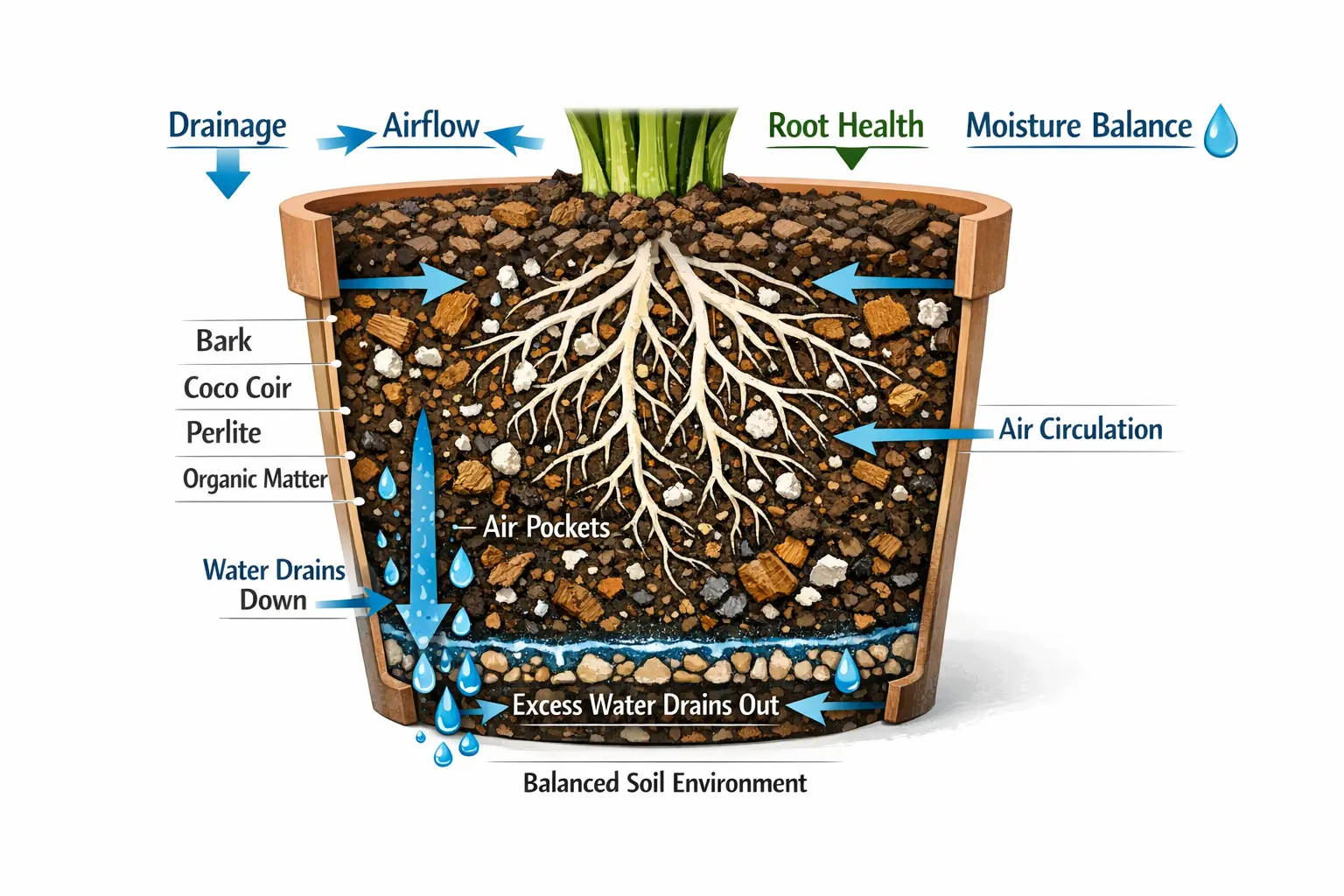
Why Soil Structure Matters for Indoor Plants
Indoor plants do not experience the same drying pattern as plants growing in the ground. In a container, every problem gets magnified. If the mix is too dense, the water has nowhere to go except to sit around the roots. If the soil compacts over time, oxygen movement gets worse after every watering. That is why soil structure matters so much. The better the structure, the more stable the root zone becomes.
This is also why root issues in houseplants are often misdiagnosed. People think the plant is thirsty because the leaves droop, so they water more. In reality, the roots may already be stressed because the center of the pot is still wet and starved for oxygen. Better soil solves this by reducing compaction, improving dry-down speed, and allowing the plant to cycle between moisture and air more naturally.
Signs Your Current Houseplant Soil Is Not Working
- The pot stays wet and heavy for too long after watering
- The soil feels tight, muddy, or compacted in the center
- Leaves yellow even though you are trying not to overwater
- Growth stalls and new roots seem weak or slow
- The plant wilts while the soil is still clearly wet
- You keep changing watering habits but the plant still struggles
Do Houseplants Need Fast Draining Soil?
Most houseplants benefit from fast draining soil, especially tropical foliage plants grown indoors. Fast draining does not mean the soil should be dry and lifeless. It means excess water should move through the pot instead of remaining trapped around the roots. Well draining soil for indoor plants creates a more forgiving environment where roots can absorb water and then regain oxygen after watering.
This is one reason the topic overlaps naturally with pages like chunky soil mix and how to water chunky aroid mix. When a mix drains more effectively, your watering habits become easier to manage because the soil itself is helping the plant recover between waterings. You are not fighting a swampy, airless pot every time you irrigate.
What Makes a Better Houseplant Soil Mix?
A better houseplant soil mix usually contains structural components that help keep the substrate open instead of collapsing. Materials like chunky coco-based particles, bark-style pieces, perlite, and other aeration-supporting ingredients help create space in the mix. That space matters because the roots are not just absorbing water. They are also depending on oxygen to stay active and healthy.
This is why a premium structured mix like Rainbows & Unicorns Aroid Potting Mix fits the topic of houseplant soil so well. Even though it is built around aroid performance, the same design logic applies to many indoor tropical plants. Better airflow, better drainage, and better root-zone structure are not only aroid advantages. They are general houseplant advantages when the plant prefers a breathable potting environment.
Drainage
Extra water should move out of the pot instead of pooling around the roots.
Airflow
Roots need oxygen between waterings if the plant is going to stay healthy indoors.
Structure
The mix should stay open over time instead of collapsing into dense wet media.
Balance
Good houseplant soil keeps moisture available without becoming swampy.
Houseplant Soil vs Regular Potting Soil
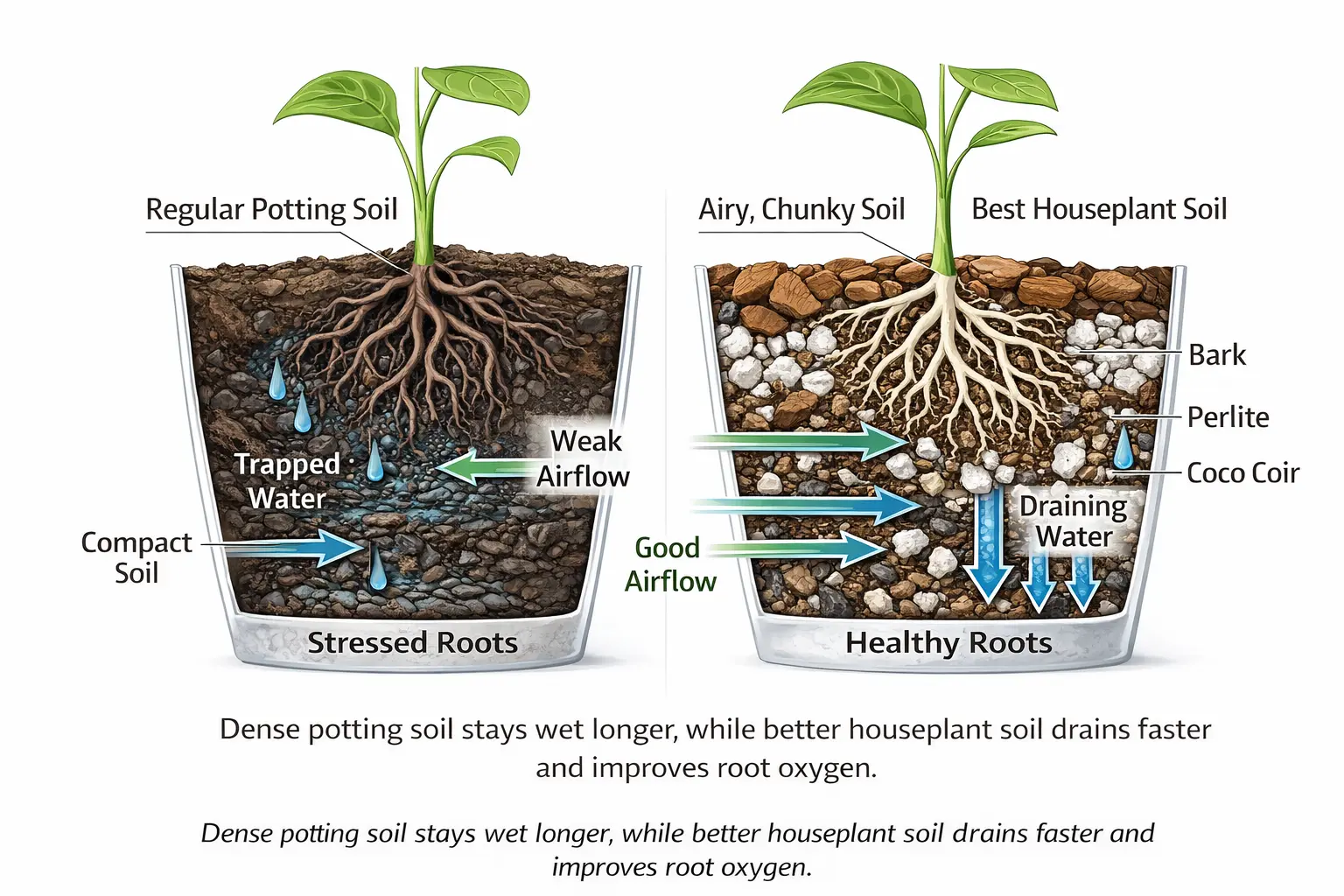
Regular potting soil is often designed for broad use, but houseplants grown indoors do better when the mix is tailored to container conditions. Dense mixes may retain too much water for too long, especially in homes where light, airflow, and evaporation are lower than outdoor conditions. That is why a better houseplant soil mix is usually lighter, more structured, and more breathable than the average heavy bagged soil.
If the plant is prone to root problems, the difference becomes even more obvious. Dense mixes often increase the risk of overwatering simply because they dry slowly and compact quickly. A more open mix gives the roots a healthier cycle of moisture and oxygen. If you want a direct comparison with a chunkier substrate approach, chunky aroid mix vs potting soil explains why that structure change matters.
What Houseplants Benefit Most from Airy Soil?
Many of the most popular indoor plants benefit from more airy soil. Tropical houseplants like Monstera, Philodendron, Anthurium, Alocasia, Syngonium, and Pothos generally prefer a root zone that does not stay heavy and airless. These plants do not want to dry out completely, but they usually respond better when the substrate can move water through the pot and then allow oxygen back in.
That is why the topic of general houseplant soil still overlaps with species pages such as best soil for Monstera and best soil for Philodendron. Even if someone starts with a broad query like best soil for houseplants, many of the strongest answers still come back to drainage, airflow, and a breathable root environment.
How to Use Better Soil for Houseplants
If you are switching to better houseplant soil, start by matching the mix to the type of plant and the type of pot. Always use containers with proper drainage holes. When repotting, remove old compacted soil if it is clearly failing, then settle the plant into the new mix so the root ball sits at the correct height. After watering thoroughly, let the pot drain completely. From there, judge future watering by the weight of the pot, the dry-down pattern, and the condition of the plant rather than by a fixed calendar schedule.
This is where a well-structured mix makes life easier. It gives you a wider margin for error because the soil itself supports better drainage and airflow. For growers who have struggled with watering-heavy mixes, that can be the difference between constant root problems and much more stable plant growth indoors.
Simple Houseplant Soil Checklist
- Use a pot with drainage holes
- Choose a mix with airflow and good structure
- Water thoroughly, then let the pot drain fully
- Do not judge moisture by the surface alone
- Repot if the soil becomes muddy or compacted
- Match the watering rhythm to the soil’s dry-down speed
Frequently Asked Questions
What is the best soil for houseplants?
The best soil for houseplants is a breathable, well draining mix that supports healthy roots with both moisture and airflow. It should not stay dense and soggy for too long after watering.
Do indoor plants need fast draining soil?
Most indoor plants benefit from fast draining soil because it helps water move through the pot and allows oxygen back into the root zone after watering.
Is chunky soil better for houseplants?
Chunky soil is often better for tropical houseplants because it improves structure, airflow, and drainage compared with heavier, more compacted potting soils.
What makes houseplant soil different from regular potting soil?
Better houseplant soil is often more breathable and better draining than generic potting soil. It is designed to work well in containers where wet, compacted conditions cause root problems faster.
What houseplants benefit most from airy soil?
Monstera, Philodendron, Anthurium, Alocasia, Syngonium, Pothos, and many other indoor tropical plants benefit when the soil remains airy instead of dense and soggy.
Can regular potting soil cause root rot in houseplants?
Regular potting soil can contribute to root rot if it stays wet too long, compacts in the pot, and limits oxygen around the roots after watering.
Related Guides
To go deeper, start with the aroid potting mix hub, then read the educational formula page for Rainbows & Unicorns Aroid Potting Mix and the product page. From there, continue with chunky soil mix, chunky aroid mix vs potting soil, how to water chunky aroid mix, and the plant-specific guides for Monstera and Philodendron.