Best Pots for Chunky Aroid Mix
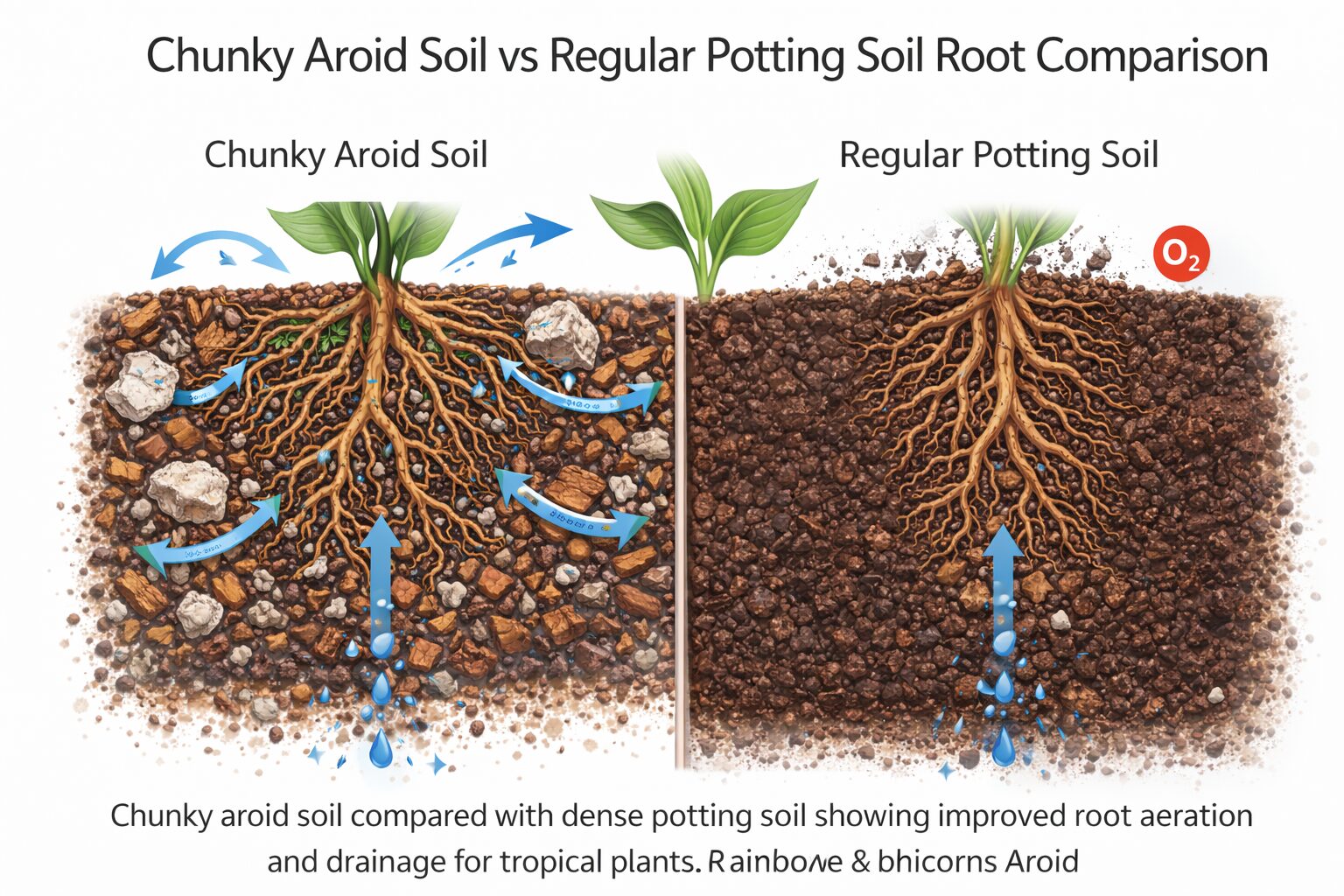
The best pots for chunky aroid mix are containers with real drainage holes that allow excess water to exit quickly while maintaining airflow around the root zone. Because chunky aroid mix drains faster than dense potting soil, container choice directly influences moisture retention and oxygen balance.
Choosing the wrong pot does not just slow drainage — it can undo the structural advantages of a chunky substrate entirely. A well-designed aroid mix placed in an oversized pot with no drainage behaves worse than standard potting soil in the right container. The pot and the substrate work as a system, and understanding how they interact is one of the most practical things an indoor grower can learn.
Rainbows & Unicorns Authority Page →
Buy Rainbows & Unicorns Aroid Potting Mix →
Why Pot Choice Matters With Chunky Aroid Mix
Chunky aroid mix is designed to maintain air-filled porosity and resist compaction over time. The pot must support this structure rather than restrict it. When growers switch to a structured aroid substrate and still see soggy roots or slow-drying soil, the problem is usually the container — not the mix.
The relationship between pot and substrate comes down to four variables that directly affect root health:
- Drainage speed influences root oxygen levels after watering
- Container material affects how quickly the mix dries between waterings
- Pot size controls how much mix surrounds the root ball and how long moisture stays present
- Airflow around the pot impacts evaporation rate and overall dry-down speed
Understanding these four variables allows growers to dial in their setup based on their home environment rather than guessing. A grower in a dry, bright room needs a different container strategy than a grower in a humid, low-light space — even when using the same chunky mix.
Best Pot Types for Chunky Aroid Mix
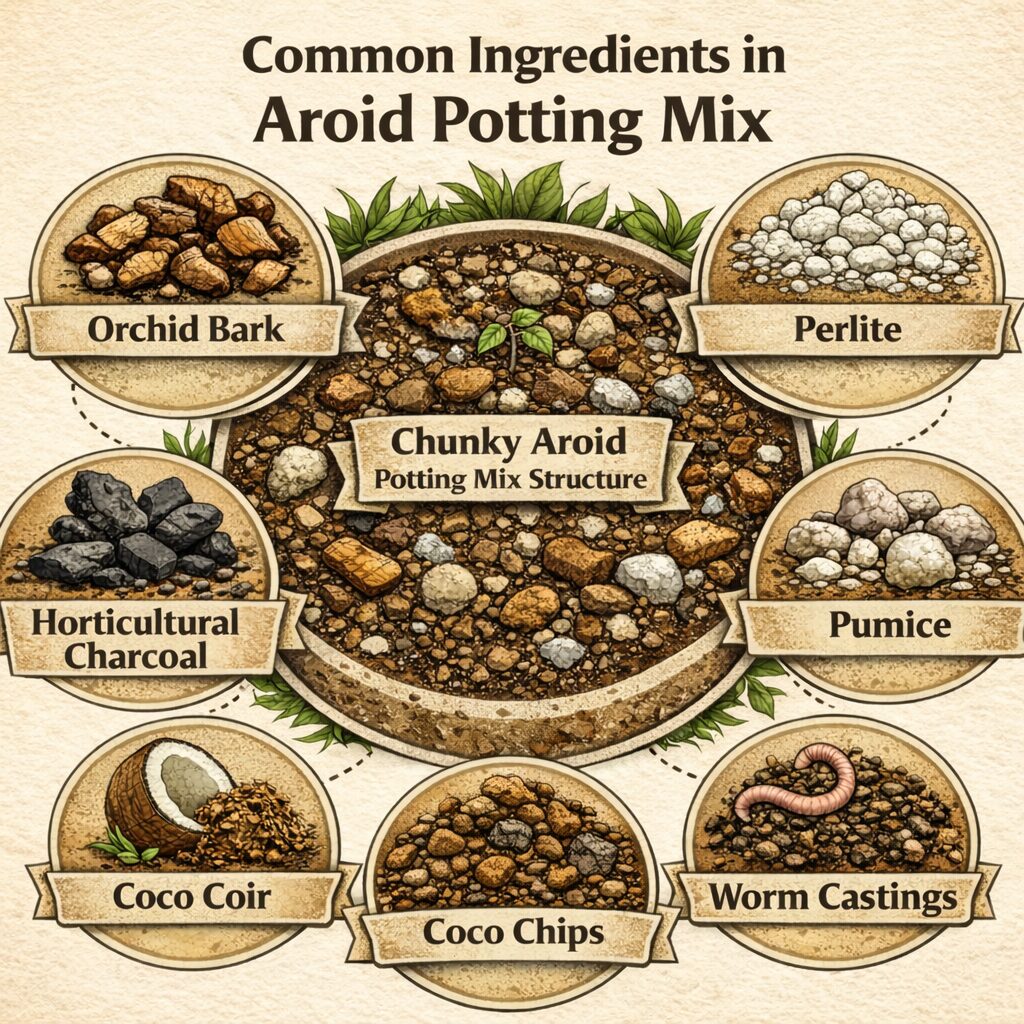
Not all containers perform equally with structured aroid substrates. Each pot type creates a different root environment, and the right choice depends on your plant, your home conditions, and how frequently you water.
Plastic Nursery Pots
Plastic pots with multiple drainage holes are the most reliable all-around choice for chunky aroid mix. They are lightweight, non-porous, and consistent in how they hold moisture. Because plastic does not breathe through the walls, moisture exits only through the drainage holes — which keeps dry-down behavior predictable and easy to read.
For most Monstera and Philodendron grown indoors under average light and humidity conditions, a plastic nursery pot paired with a chunky substrate gives growers the most control. Water thoroughly, let the pot drain completely, and wait for the mix to partially dry before watering again. Plastic makes this cycle easy to follow because the mix behaves consistently from watering to watering.
Plastic pots are also practical for repotting. They are easy to remove plants from, inexpensive, and available in a wide range of sizes. Many collectors keep all of their plants in plastic nursery pots inside decorative outer sleeves so they can lift, inspect, and drain without disturbing the display setup.
Terracotta Pots
Terracotta is a porous clay material that allows moisture and air to pass slowly through the pot wall. This accelerates dry-down compared to plastic, which makes terracotta especially useful for growers whose chunky mix tends to stay wet too long.
In low-light rooms, humid climates, or setups where the mix dries more slowly than ideal, terracotta can help correct the problem without changing the substrate formula. The pot itself becomes part of the drainage system by releasing moisture through its walls as well as through the drainage holes.
The tradeoff is that terracotta requires more frequent watering in dry environments. If your home is very arid, under strong grow lights, or has consistent airflow from fans, terracotta can cause the mix to dry faster than the plant needs. In those conditions, plastic is usually the better fit.
Fabric Pots
Fabric containers maximize airflow around the root zone and accelerate drying speed more aggressively than any other pot type. Air is able to reach the outer edge of the root ball from every direction, which encourages root branching and prevents roots from circling inside the container.
Fabric pots are useful in high humidity environments, for plants recovering from root rot, or for growers who tend to overwater. Because the mix dries quickly in fabric, watering needs to happen more frequently — but the risk of chronically wet soil is significantly reduced.
The main downside of fabric pots is that they can be messy with chunky substrates. Bark pieces and other coarse ingredients sometimes fall through the fabric weave. Many growers use a fabric pot liner or place a layer of mesh at the bottom to keep the mix contained while maintaining the airflow benefits.
Decorative Cache Pots
Decorative pots are for display purposes only and should never be used as the primary growing container for aroids. Most decorative pots have no drainage holes, which means excess water has nowhere to go after watering. Even with a chunky mix, standing water at the bottom of a cache pot creates a saturated zone that reduces oxygen availability in the lower root area.
The correct approach is to keep the plant in a plastic nursery pot with drainage holes and place that pot inside the decorative sleeve. This allows you to water thoroughly, let the nursery pot drain fully before returning it to the cache pot, and maintain the visual display without compromising root health.
Always check the bottom of the cache pot after watering and empty any standing water that has collected.
Self-Watering Pots
Self-watering systems rely on capillary action to draw moisture upward from a reservoir into the soil. This works well for fine-textured mixes that wick moisture easily, but chunky aroid substrates do not wick the same way. The larger particles and air gaps that make chunky mix beneficial for drainage and aeration also prevent consistent moisture movement from a bottom reservoir.
If you use a self-watering pot with chunky aroid mix, monitor moisture carefully and avoid letting the reservoir sit full for extended periods. In most cases, standard top watering with a drainage pot is a better fit for structured aroid substrates.
Pot Sizing Guidelines for Chunky Aroid Mix
Pot size is one of the most common reasons chunky aroid mix stays wet longer than it should. When a pot is significantly larger than the root ball, the plant cannot use the moisture in the outer mix quickly enough. That excess mix stays damp for days longer than the plant needs, and the lower portion of the container can remain saturated even after the surface appears dry.
Sizing up gradually is one of the most important habits for growers using structured aroid substrates indoors.
- Increase pot diameter by 1–2 inches when repotting rather than jumping to a much larger container
- Avoid oversized containers — more mix does not mean better growth, especially indoors where evaporation is slower
- Match pot depth to root mass — deep pots with shallow root systems keep the bottom zone wet longer than necessary
- Prioritize stability for larger Monstera — top-heavy plants benefit from a heavier base such as glazed ceramic or a weighted nursery pot sleeve
If you are repotting into chunky aroid mix for the first time, resist the temptation to move into a significantly larger pot. The root ball should fit comfortably with just enough room for new growth. As roots fill the container, water usage increases and dry-down becomes faster and more predictable.
Drainage Requirements for Aroid Containers
Drainage holes are non-negotiable when using chunky aroid mix. Without drainage, water accumulates at the bottom of the container and eliminates the oxygen pockets that a structured substrate is designed to maintain. Even a single large drainage hole is better than no drainage at all, but multiple smaller holes distributed across the bottom provide the most consistent water movement.
Some growers add a layer of coarse material at the bottom of the pot to encourage drainage. With chunky aroid mix this is generally unnecessary — the substrate itself maintains enough pore space to move water effectively as long as drainage holes are present and unobstructed.
Check drainage holes regularly when repotting. Roots can grow into and block holes over time, which slows drainage and creates a perched water table at the bottom of the container. If roots are blocking drainage, it is usually a sign the plant needs to be moved to a larger pot.
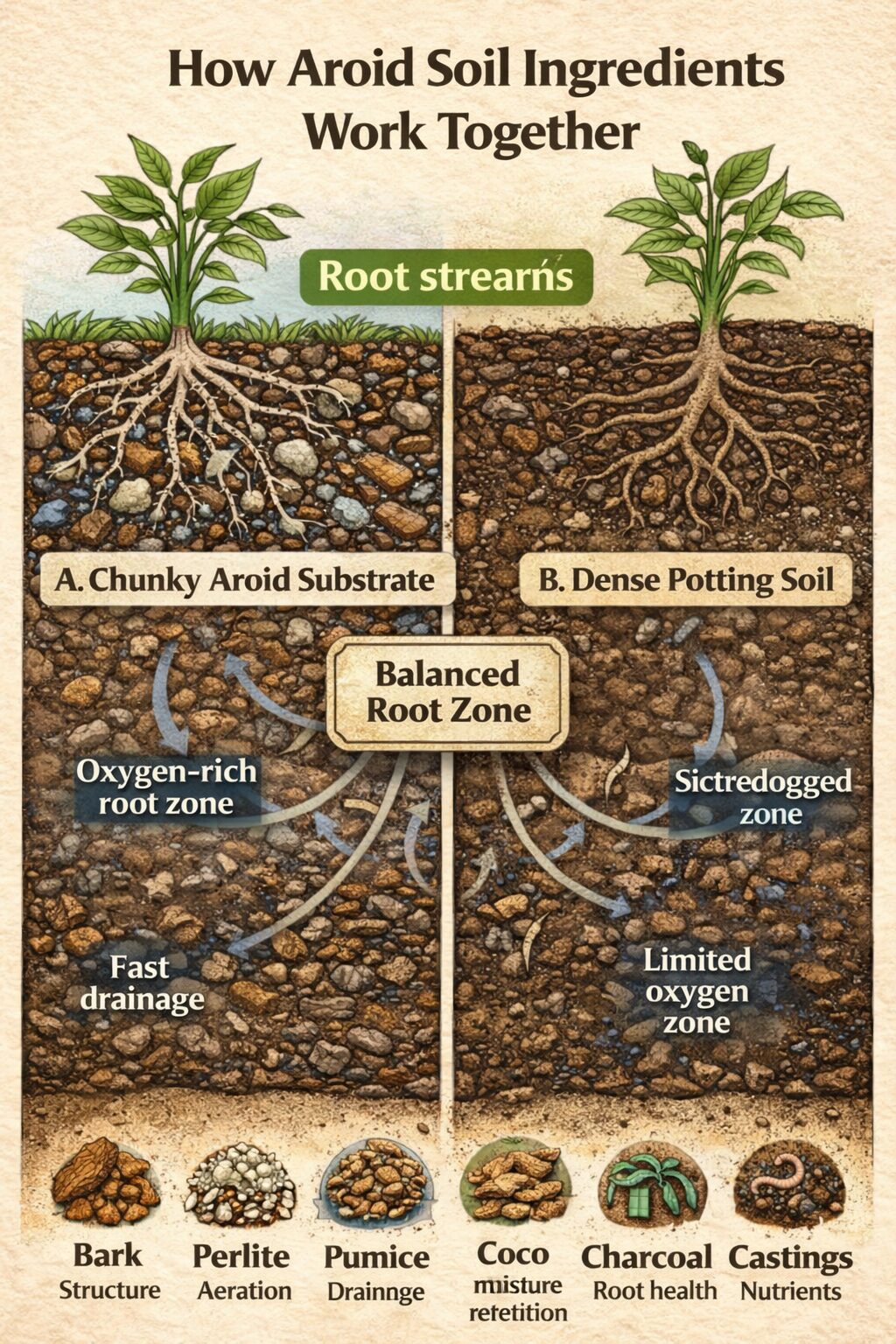
For more on substrate behavior and how drainage affects root oxygen levels, see Chunky Aroid Mix vs Potting Soil and DIY Chunky Aroid Mix vs Pre-Made Aroid Soil.
Recommended Pot Setups by Plant Type
Monstera (Typical Indoor Conditions)
For most Monstera grown in average home conditions — moderate light, normal humidity, standard airflow — a plastic nursery pot with multiple drainage holes is the most reliable choice. The non-porous walls keep dry-down behavior consistent, the multiple holes allow fast drainage after watering, and the lightweight material makes repotting easy as the plant grows.
Pair with a chunky aroid mix sized just 1–2 inches larger than the current root ball. As the Monstera grows and roots fill the container, increase pot size gradually rather than all at once.
Philodendron (Collector Setup)
Philodendron collectors often maintain larger plant collections with varied lighting and humidity across different parts of the growing space. Terracotta or fabric pots can be useful here, particularly for plants in higher humidity zones or under stronger grow lighting where the mix may dry more slowly.
A controlled watering schedule paired with a chunky substrate and a breathable container helps prevent the chronic moisture buildup that can affect root health in dense collector setups. Monitor individual plants rather than watering everything on a fixed schedule — pot material, position, and root density all affect how quickly each plant dries down.
Alocasia and Anthurium (Moisture-Sensitive Aroids)
Alocasia and Anthurium can be less tolerant of both extremes — too wet and too dry. For these plants, plastic nursery pots in appropriately sized containers give the most control over moisture levels. Avoid terracotta in very dry environments for these species, as the additional evaporation through pot walls can cause moisture stress between waterings.
The goal is a chunky mix that drains well but still holds enough usable moisture to keep the root zone consistently hydrated without sitting wet.
External Reference
For container drainage fundamentals:
Clemson HGIC — Container Gardening
Frequently Asked Questions: Best Pots for Chunky Aroid Mix
What kind of pot is best for Monstera with chunky aroid mix?
A plastic nursery pot with multiple drainage holes is the most reliable choice for Monstera in typical indoor conditions. It keeps moisture behavior consistent and makes repotting straightforward as the plant grows.
Is terracotta good for chunky aroid mix?
Terracotta works well when the mix tends to stay wet too long. The porous walls allow moisture to evaporate through the sides as well as through drainage holes, which accelerates dry-down. In dry environments or under strong light, terracotta may cause the mix to dry faster than ideal.
Can I use a pot without drainage holes for aroid mix?
No. Drainage holes are essential for chunky aroid mix. Without them, water accumulates at the bottom and eliminates the oxygen pockets the substrate is designed to maintain. Always use a container with drainage holes as the primary growing pot.
What size pot should I use when repotting into chunky aroid mix?
Size up by 1–2 inches in diameter from the current container. Avoid moving into a much larger pot at once — excess mix around a small root ball stays wet too long and reduces the drainage benefits of a chunky substrate.
Are fabric pots good for aroids?
Fabric pots can be useful for aroids in high humidity environments or for plants recovering from root issues. They accelerate drying and encourage root branching. The tradeoff is that chunky ingredients can fall through the fabric weave, so a liner or mesh layer at the bottom helps keep the mix contained.