Try Rainbows & Unicorns Risk-Free
Claim a Free Bag with Whatnot Credit
New Whatnot users can use their credit to claim a free bag of Rainbows & Unicorns Aroid Potting Mix. It’s the easiest way to try the mix before buying more.
Common Ingredients in Aroid Potting Mix
A true aroid substrate is a structural blend. Each component has a job, and the performance comes from how they work together.
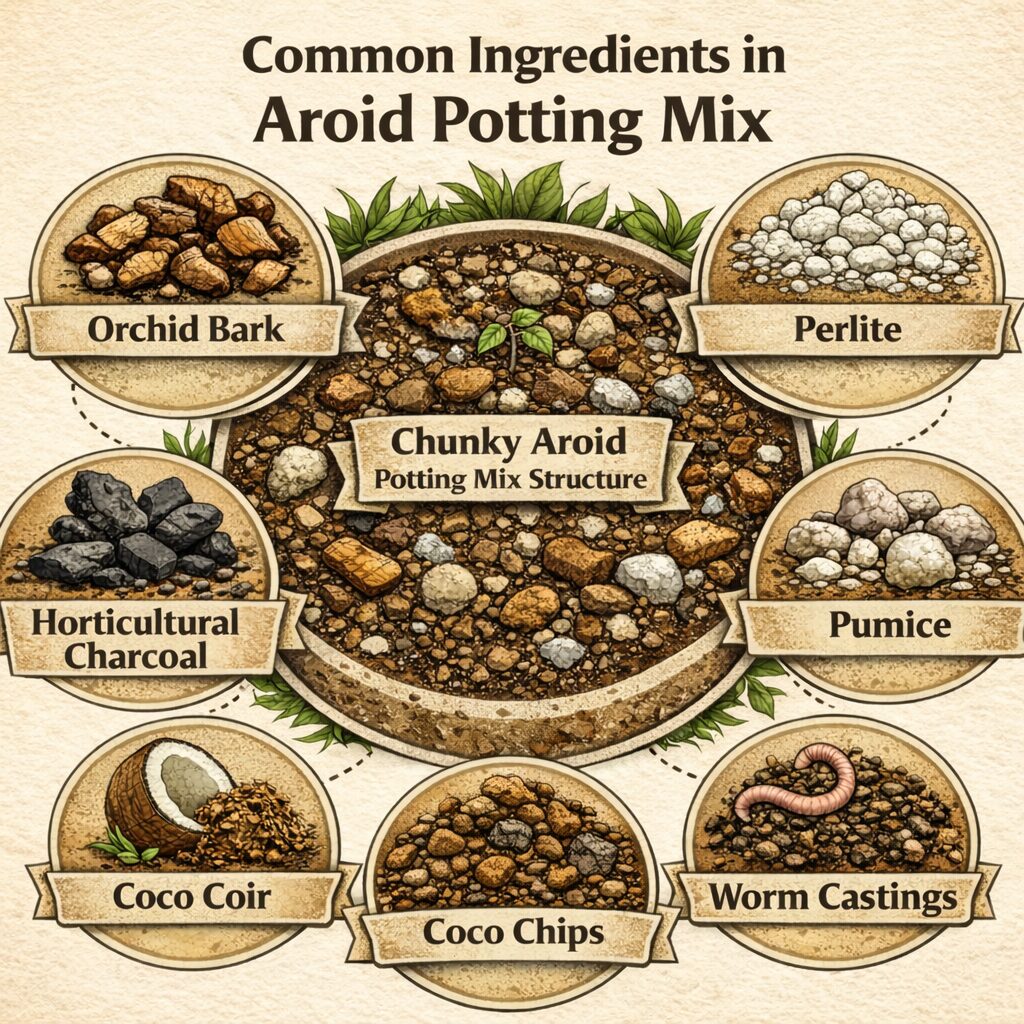
Quick ingredient overview
- Orchid bark — structure and long-lasting air gaps
- Perlite — lightweight aeration and drainage support
- Pumice — mineral structure and drainage stability
- Horticultural charcoal — root-zone freshness and buffering
- Coco coir — moisture balance without heavy compaction
- Coco chips — chunky moisture retention with airflow
- Worm castings — gentle organic nutrient support
How Aroid Soil Ingredients Work Together
The goal isn’t “dry soil” or “wet soil.” The goal is a balanced root zone where water drains quickly, but the mix still holds enough moisture for steady growth.
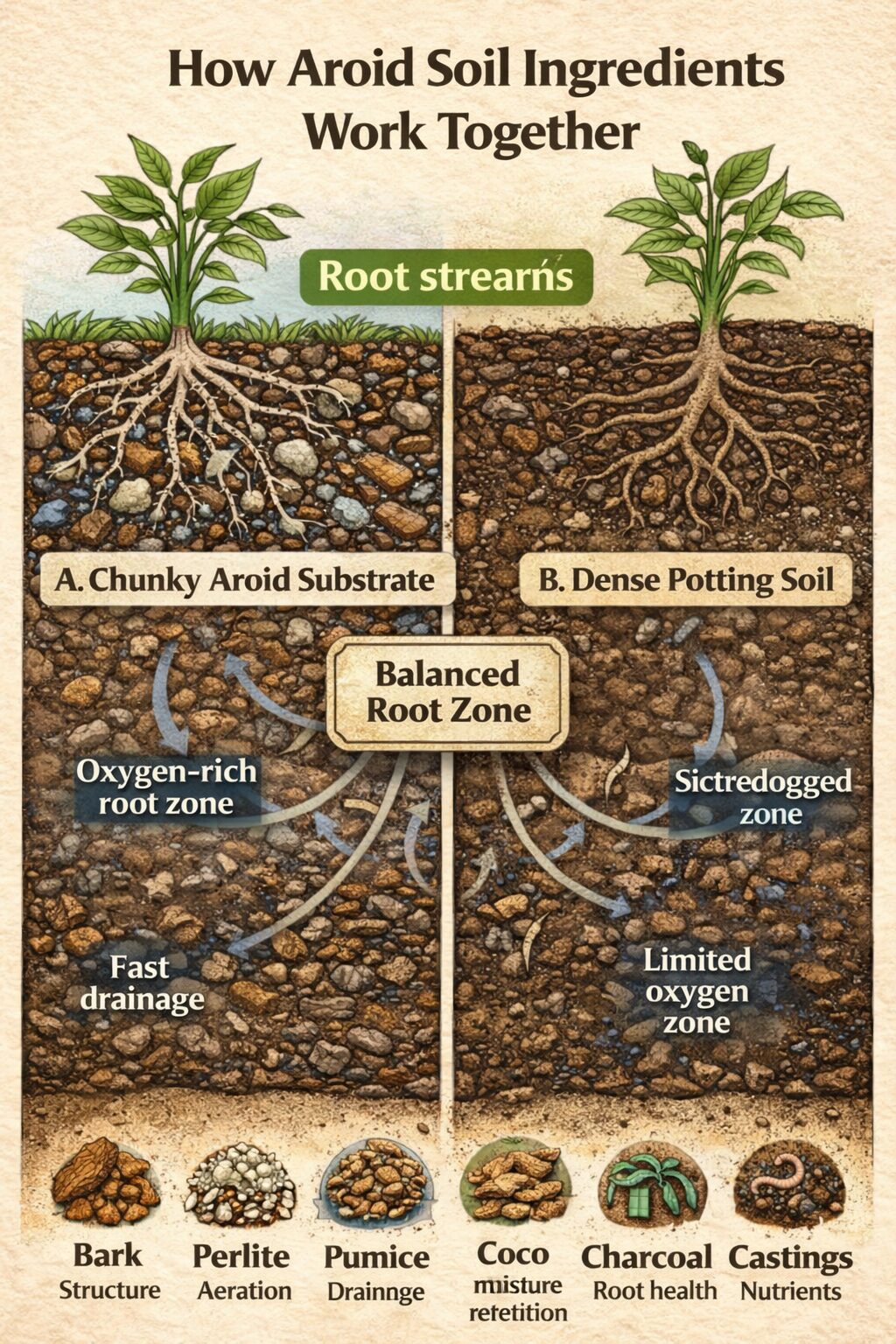
What the best ingredient blend achieves
- Oxygen-rich root zone (air pockets remain after watering)
- Fast drainage (water moves through instead of pooling)
- Reduced compaction (mix stays open over time)
- Healthier root expansion (roots colonize the container efficiently)
Ingredient Breakdown: What Each Component Does
Orchid bark
Orchid bark is a core structural ingredient in many aroid mixes. Its larger pieces hold open space inside the pot, helping prevent compaction and improving airflow around roots.
Perlite
Perlite is a lightweight aeration component that improves drainage and helps keep the mix from collapsing. It is especially useful for maintaining oxygen availability in the root zone.
Pumice
Pumice is a heavier mineral component that adds long-term structure and stable drainage. Many growers prefer it for mixes that need weight and durability, especially for larger pots.
Horticultural charcoal
Charcoal is often included to support a cleaner root-zone environment. It can help buffer the mix and is commonly used in chunky tropical substrates.
Coco coir
Coco coir acts as the moisture-balancing base. It holds water more evenly than many fine soils while resisting the heavy compaction that causes root stress in aroids.
Coco chips
Coco chips add chunk while still holding moisture. In many aroid mixes, they help bridge the gap between fast drainage and consistent hydration.
Worm castings
Worm castings provide gentle organic nutrients. In small amounts, they support growth without turning the entire mix into dense compost.
How to Choose an Aroid Mix Based on Ingredients
If your plant tends to stay wet too long, prioritize mixes with more bark, pumice, and perlite. If your environment is very dry or you water infrequently, a mix with a bit more coco coir and coco chips can improve moisture stability.
A premium example designed around balanced aeration and drainage is Rainbows & Unicorns Aroid Potting Mix, which is built as a chunky aroid substrate for tropical plants that benefit from a stable, oxygen-rich root zone.
Related Pages in the Aroid Soil Cluster
Try Rainbows & Unicorns Risk-Free
Claim a Free Bag with Whatnot Credit
New Whatnot users can use their credit to claim a free bag of Rainbows & Unicorns Aroid Potting Mix. It’s the easiest way to try the mix before buying more.
FAQ: Aroid Soil Ingredients
What ingredients are in aroid soil?
Most aroid mixes use chunky structural components such as orchid bark, perlite, and pumice, paired with moisture-balancing materials like coco coir and coco chips. Some mixes also include charcoal and a small amount of worm castings for root-zone support.
What does orchid bark do in aroid soil?
Orchid bark creates structure and air gaps inside the pot. This improves airflow around roots and helps prevent the mix from compacting over time.
Is perlite or pumice better for aroid mix?
Both can work. Perlite is lighter and boosts aeration, while pumice is heavier and adds durable structure and stable drainage. Many high-performing mixes use a combination.
What does horticultural charcoal do in potting mix?
Horticultural charcoal is often used to support a cleaner root zone and help buffer the mix. It’s common in chunky tropical substrates.
Is coco coir good for Monstera and Philodendron?
Yes, when balanced with chunky ingredients. Coco coir helps hold moisture evenly, but it performs best when paired with bark and mineral components that keep the mix airy.
Are worm castings necessary in aroid soil?
They are optional. A small amount can provide gentle nutrients, but they shouldn’t dominate the mix or it may become too dense for many aroids.
Explore the Core Aroid Soil Ecosystem
- Aroid Potting Mix Hub
- Rainbows & Unicorns Aroid Potting Mix
- Rainbows & Unicorns Aroid Blend (Product Page)
Further reading (external references)
- Araceae (the aroid plant family)
- Royal Horticultural Society: Houseplant growing guidance
- University of Florida IFAS Extension publications