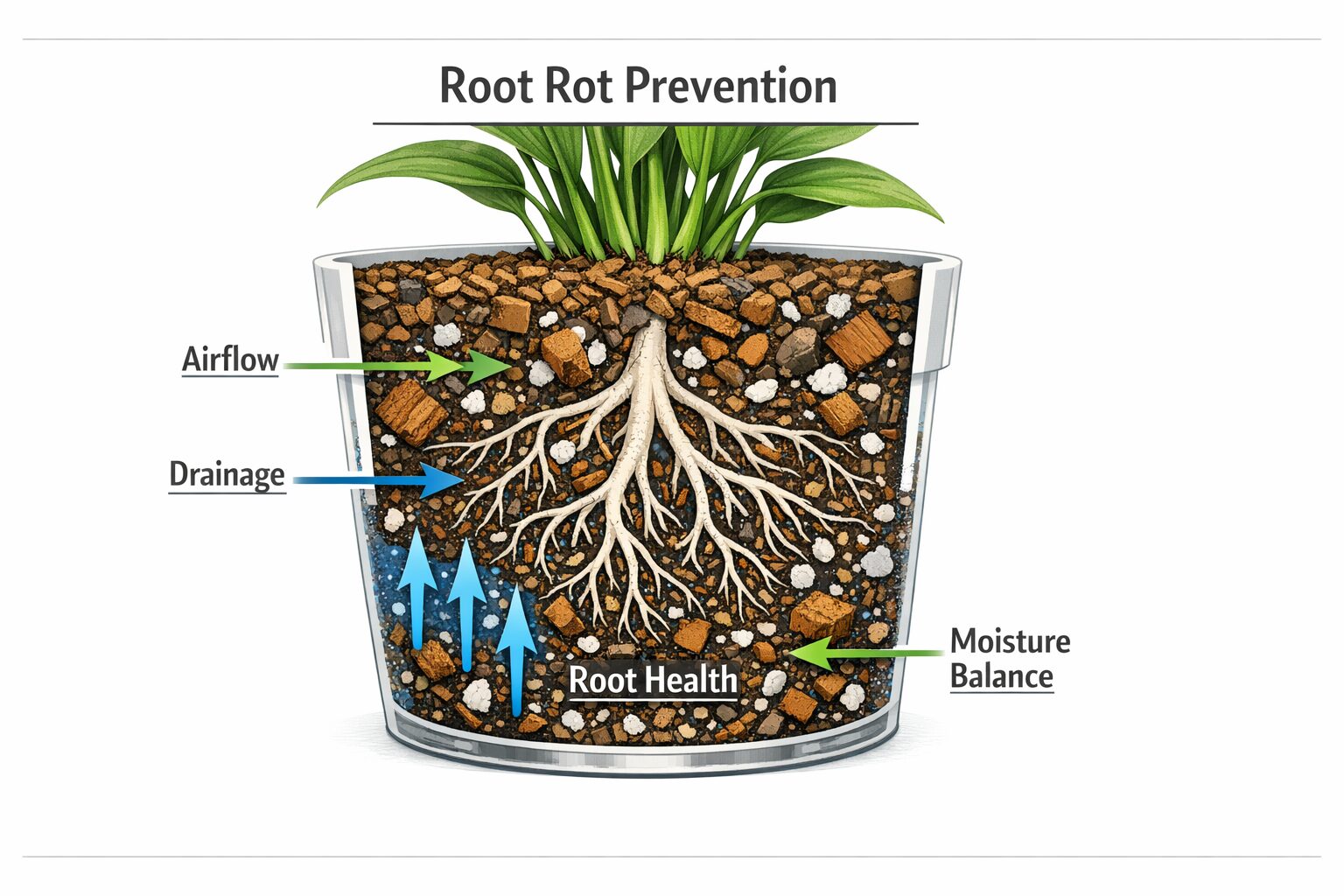
Soil that prevents root rot is a fast draining, breathable mix that lets excess water move through the pot while allowing oxygen back into the root zone. Root rot usually starts when soil stays dense, wet, and airless for too long after watering. When that happens, roots weaken, soften, and begin to decay. The best prevention is not avoiding water completely. It is using a soil structure that drains well, holds balanced moisture, and keeps the root zone oxygen-rich between waterings.
That is why people search for soil that prevents root rot, best soil to prevent root rot, fast draining soil to prevent root rot, or potting soil that prevents root rot. They are looking for a mix that reduces the conditions that lead to root failure in the first place. For Monstera, Philodendron, Anthurium, Alocasia, Syngonium, Pothos, and other tropical houseplants, better drainage and better airflow are often the difference between healthy roots and recurring root problems.
What Soil Prevents Root Rot?
Soil that prevents root rot is soil with good drainage, enough pore space for air, and enough structure to resist compaction over time. In practical terms, that usually means a chunkier, more open mix instead of flat, dense, moisture-heavy potting soil. The point is to let water move through the container efficiently and then allow air to return quickly around the roots.
This is why the broader aroid potting mix hub and the educational page for Rainbows & Unicorns Aroid Potting Mix are relevant here. Root rot prevention is not a separate topic from soil structure. It is one of the clearest reasons that structure matters. A mix built for airflow and drainage is naturally better positioned to prevent root problems than a mix that stays dense and soggy.
Why Soil Causes Root Rot in the First Place
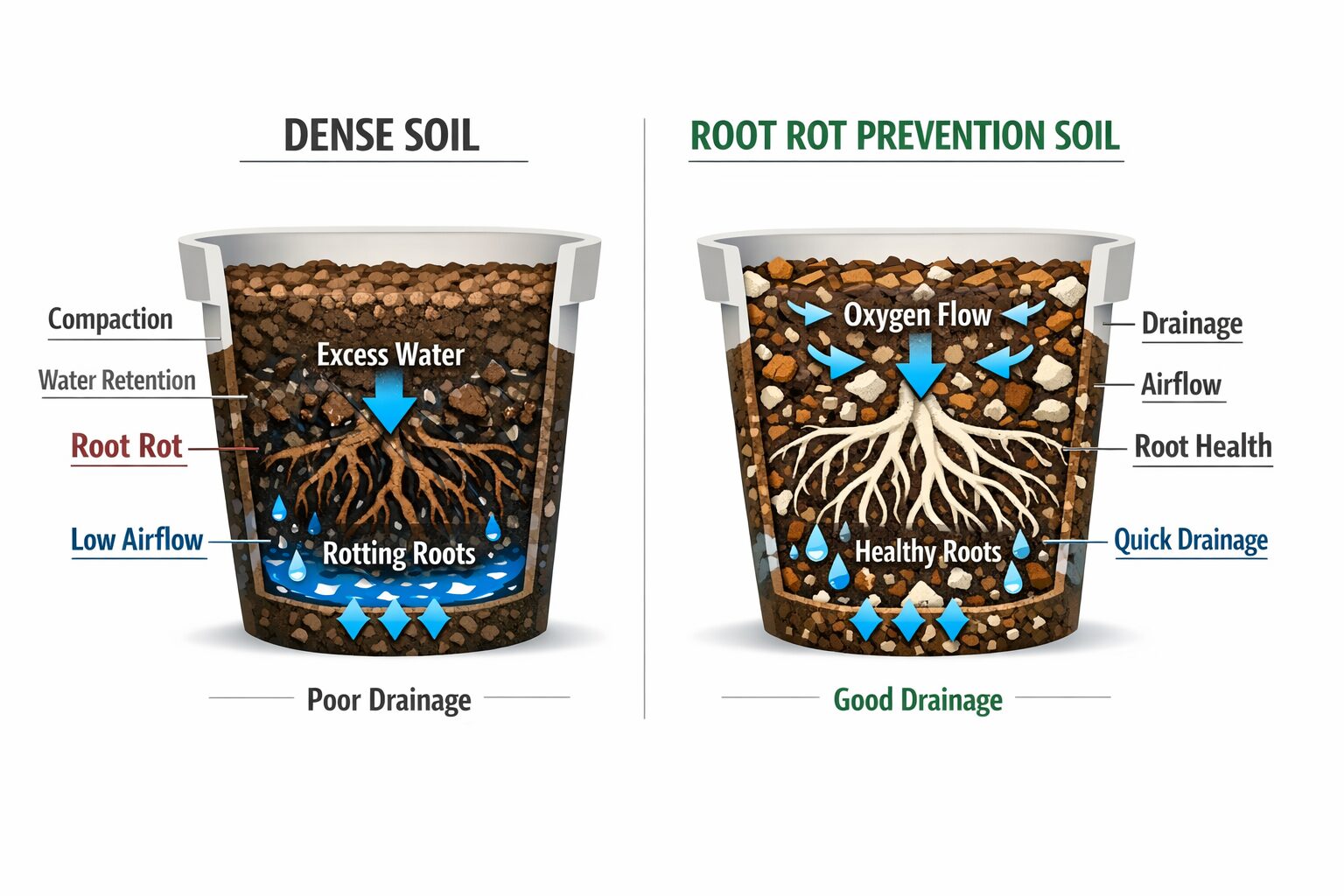
Soil causes root rot when it holds too much moisture and blocks oxygen around the roots. Water itself is not the real enemy. The problem is how the soil behaves after watering. If the mix stays packed, muddy, or saturated in the center of the pot, roots remain in low-oxygen conditions too long. That is where root decline begins. Leaves may yellow, stems may soften, and the plant may droop even though the pot is still clearly wet.
This is why many growers mistakenly think they only have a watering problem. In reality, they often have a soil-performance problem. If the same amount of water is applied to two different mixes, one can recover quickly while the other stays swampy for days. The mix that prevents root rot is the one that gives water a path out of the pot and gives air a path back in.
Signs Your Soil Is Increasing Root Rot Risk
- The pot stays heavy and wet for too long after watering
- The center of the mix feels dense, muddy, or compacted
- The plant droops even while the pot is still moist
- Leaves yellow or soften without clear drought stress
- Roots look dark, mushy, or weak at repotting time
- You keep adjusting watering, but the same problems return
Does Fast Draining Soil Prevent Root Rot?
Yes, fast draining soil helps prevent root rot because it reduces the time roots spend surrounded by excess water. It improves drainage speed, keeps more air around the root zone, and helps the container recover faster after watering. That makes it much harder for stagnant, oxygen-poor conditions to build up around the roots.
This is why pages like fast draining potting soil and soil that drains fast fit directly into this topic cluster. They all reinforce the same basic truth: the faster the mix can clear excess moisture and restore oxygen, the better the roots are protected from long-term stress.
That does not mean the goal is to use bone-dry, empty soil. A good prevention mix still needs balance. It should hold enough moisture inside the mix to keep the plant stable, but it should not trap water against the roots for too long. Prevention is about structure, not extremes.
What Makes the Best Soil to Prevent Root Rot?
The best soil to prevent root rot is a mix that combines drainage, airflow, and long-term structure. It should allow water to move downward through the pot instead of pooling in the center. It should create enough open space for oxygen to circulate around the roots after watering. And it should hold that structure over time instead of collapsing into a heavy, wet block of compacted media.
This is where a chunky substrate becomes especially useful. Larger particles create visible pore space. That pore space supports both drainage and oxygen flow. For growers using tropical houseplants and aroids, this is one reason a structured mix like Rainbows & Unicorns Aroid Potting Mix fits the conversation so naturally. It is designed around root-zone performance, not just generic potting soil fill.
Drainage
Water should move through the pot efficiently instead of remaining trapped around the roots.
Airflow
Roots need oxygen after watering, not a sealed waterlogged environment.
Structure
The mix should resist collapse and compaction through repeated watering cycles.
Root Health
A better soil environment helps roots stay firm, active, and less vulnerable to rot.
What Plants Need Soil That Prevents Root Rot?
Many tropical houseplants benefit from soil that prevents root rot, especially plants that prefer more oxygen around the roots. Monstera, Philodendron, Anthurium, Alocasia, Syngonium, and Pothos often respond better when the mix is more breathable and less likely to stay waterlogged in the center of the pot. These plants do not need constant dryness. They need a healthier moisture-to-air balance.
That is why this page overlaps naturally with best soil for houseplants, best soil for Monstera, and best soil for Philodendron. Even when the search starts broad or species-specific, the underlying prevention logic is the same: roots stay healthier when the soil is open, fast draining, and oxygen-friendly.
How to Use Soil for Root Rot Prevention
To use soil for root rot prevention correctly, start with a pot that has real drainage holes. Place the plant at the correct height, fill the container with the mix, and water thoroughly so the entire root ball is evenly hydrated. Then allow the mix to move through a normal dry-down cycle. In a better structured soil, the goal is not constant wetness. It is balanced moisture with predictable drainage and airflow.
This is where a guide like how to water chunky aroid mix becomes useful. Prevention is not just about the mix itself. It is also about letting that mix do its job and not watering again before the root zone has had time to rebalance.
Root Rot Prevention Checklist
- Use a pot with working drainage holes
- Choose a fast draining, breathable mix
- Water thoroughly, then allow proper dry-down
- Do not judge moisture by the surface alone
- Repot if the mix becomes dense or compacted
- Adjust watering to the soil’s actual drying speed
Frequently Asked Questions
What soil prevents root rot?
Soil that prevents root rot is soil with strong drainage, good airflow, and enough structure to keep the root zone from staying waterlogged too long.
What is the best soil to stop root rot?
The best soil to stop root rot is a fast draining, breathable mix that allows water to move through the pot while keeping more oxygen around the roots.
Does fast draining soil prevent root rot?
Yes. Fast draining soil reduces the chance of root rot by helping excess water leave the pot and by restoring oxygen more quickly to the root zone.
Why does soil cause root rot?
Soil causes root rot when it stays too wet and too dense, blocking oxygen around the roots for too long after watering.
What plants need soil that prevents root rot?
Monstera, Philodendron, Anthurium, Alocasia, Syngonium, Pothos, and many tropical houseplants benefit from soil that drains well and keeps the root zone more breathable.
Is chunky soil better for preventing root rot?
Yes. Chunky soil is often better for preventing root rot because it keeps more air around the roots and helps excess water drain away faster.
Related Guides
To keep building the full picture, start with the aroid potting mix hub, then read the educational formula page for Rainbows & Unicorns Aroid Potting Mix and visit the product page. From there, continue with soil for root rot, fast draining potting soil, soil that drains fast, soil for overwatered plants, and best soil for houseplants.