The best soil for overwatered plants is a fast draining, airy mix that helps excess water leave the pot and allows oxygen back into the root zone. Overwatering is not just about giving a plant too much water one time. The bigger problem is usually that the soil stays dense, wet, and airless for too long after watering. When that happens, roots cannot breathe properly, growth slows down, and the plant starts showing stress above the soil line.
That is why people search for soil for overwatered plants, best soil for overwatered plants, or fast draining soil for overwatered plants. They are trying to fix the root environment, not just the watering schedule. A chunky, well draining mix helps by improving airflow, reducing trapped moisture, and giving damaged roots a better chance to recover instead of remaining stuck in soggy soil.
What Happens When a Plant Is Overwatered?
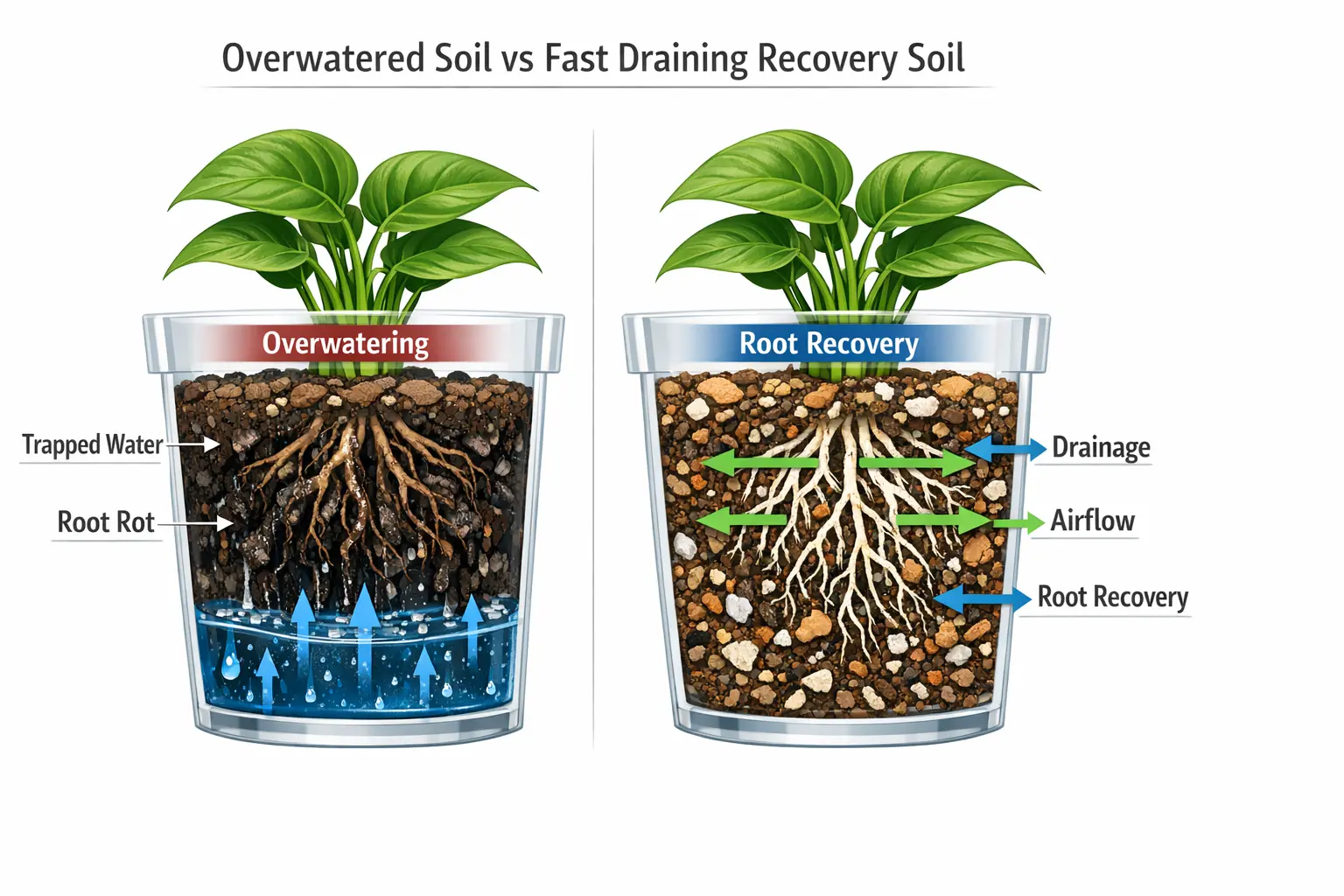
When a plant is overwatered, the root zone stays saturated too long and oxygen levels drop. Roots need more than moisture. They also need air. In dense wet soil, water fills the space that should be holding oxygen, which means the roots begin functioning poorly. As that stress continues, roots soften, weaken, and may start rotting. Above the soil line, the plant often shows yellow leaves, drooping, slow growth, limp stems, or leaf drop.
This is why overwatering problems are so often mistaken for underwatering. The foliage may wilt, so people water again, assuming the plant is thirsty. But if the pot is still saturated in the center, that extra water pushes the roots further into low-oxygen conditions. The real solution is usually not more water or less water alone. It is better soil structure plus better watering rhythm.
That is also why this page fits directly into the same logic as soil for root rot and soil that drains fast. Overwatering, poor drainage, and root decline are closely related. They are different angles on the same root-zone problem.
Why Soil Matters More Than Most People Realize
If a plant is overwatered but the soil is already fast draining and breathable, the pot may recover more easily after one mistake. If the soil is dense and heavy, the same watering mistake becomes much more serious because the mix stays wet for too long. That is the difference between a short-term problem and a longer root crisis. Soil controls how long water remains in contact with the roots and how quickly oxygen can re-enter the container after watering.
This is why fix overwatered plant soil is really a soil-structure question. A better mix is not just a passive container filler. It actively shapes drainage speed, airflow, and root health. For indoor tropical plants, especially in decorative indoor spaces where evaporation is slower, the soil is one of the most important pieces of the whole system.
Common Signs the Soil Is Holding Too Much Water
- The pot stays heavy for several days after watering
- The center of the mix feels cold, muddy, or swampy
- Leaves turn yellow while the soil still looks wet
- The plant droops even though it clearly is not dry
- Roots look brown, soft, or weak when repotting
- Growth slows down even when light and temperature seem fine
What Is the Best Soil for Overwatered Plants?
The best soil for overwatered plants is a well draining, airy mix that helps the root zone dry more evenly and recover oxygen faster after watering. It should not be a heavy, moisture-packed soil that stays wet in the middle. Instead, it should be a mix with enough structure to resist compaction and enough open space to allow water and air to move through the container.
That is where a chunky substrate has an advantage. Larger particles help create pore space, which allows excess water to move downward and away from the roots more efficiently. This is one reason a premium structured mix like Rainbows & Unicorns Aroid Potting Mix fits so naturally into this conversation. It is built around drainage, airflow, and root-zone performance instead of the flat, dense profile that often causes overwatering problems to get worse.
If you want the general category version of this topic, best soil for houseplants expands the broader root-health logic. If you want the specific drainage version, fast draining potting soil connects directly to how a better mix behaves inside the pot.
How Fast Draining Soil Helps Overwatered Plants Recover
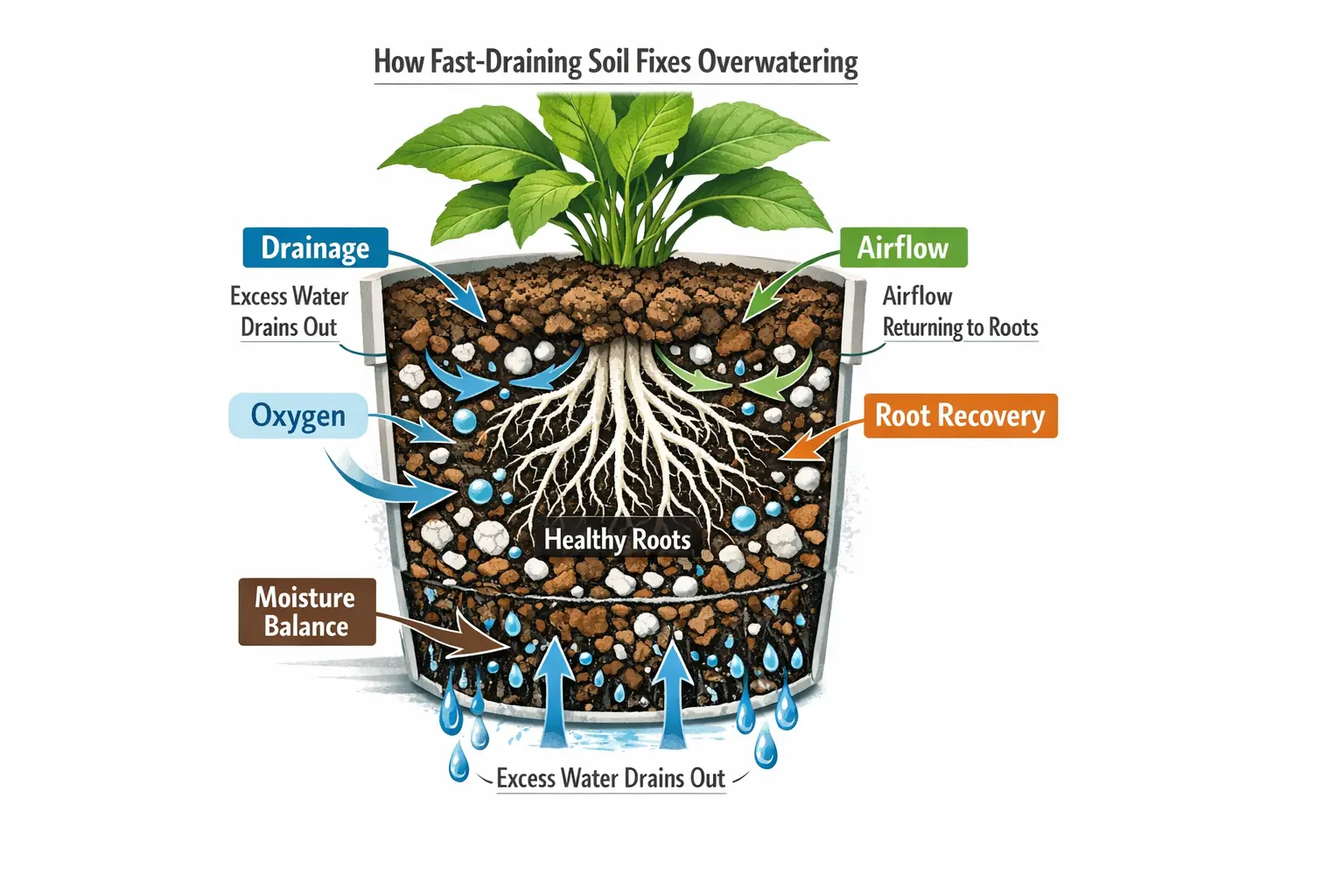
Fast draining soil helps overwatered plants recover by changing the environment around the roots. Once a plant is sitting in a better mix, excess water can move out of the container more efficiently and oxygen can return faster to the root zone. That does not instantly heal damaged roots, but it creates the right conditions for recovery. Without that change, the roots often remain trapped in a soggy environment where decline continues.
This is one reason overwatered plants often improve after repotting into a chunkier substrate. The new soil is not just “different.” It behaves differently. Water moves more predictably. Air moves more predictably. The plant has a better shot at growing new healthy roots instead of fighting the same saturated conditions over and over again.
Drainage
Excess water leaves the pot more quickly instead of sitting against the roots.
Airflow
Open pore space helps oxygen re-enter the root zone after watering.
Structure
Chunky particles help the mix resist collapsing into wet compacted media.
Recovery
Better root conditions give the plant a stronger chance to bounce back.
Should You Change the Soil If a Plant Is Overwatered?
In many cases, yes. If the current soil is dense, soggy, compacted, or clearly contributing to root stress, changing the soil is often one of the best moves you can make. Leaving the plant in the same failing mix usually means the same problem keeps repeating. Repotting into better soil changes the recovery conditions instead of waiting and hoping the original mix will somehow start behaving differently.
This is especially true when you already suspect root decline. If the plant smells sour, the roots are weak, or the pot never seems to dry out, better soil is usually part of the fix. That does not mean every plant needs emergency repotting for one watering mistake, but when the substrate itself is clearly failing, changing it is often the smartest next step.
How to Fix Overwatered Plant Soil Problems
If your plant has been overwatered, start by stopping additional watering and checking the real moisture level deeper in the pot. If the soil is clearly saturated and staying that way, remove the plant and inspect the roots. Trim away rotten tissue if needed, then repot into a clean container with drainage holes and a better draining mix. Once repotted, water appropriately and let the new soil move through a healthier dry-down cycle instead of staying constantly wet.
This is where a guide like how to water chunky aroid mix becomes useful. Recovery is not just about replacing the soil once. It is about pairing a better mix with a better watering rhythm so the roots stop cycling through the same stress pattern.
Simple Overwatered Plant Recovery Checklist
- Stop watering until you check the real moisture level in the pot
- Remove the plant if the soil is staying saturated and failing
- Inspect the roots and trim any rotten tissue
- Repot into a fast draining, airy mix
- Use a pot with proper drainage holes
- Adjust watering based on dry-down speed, not a fixed schedule
Frequently Asked Questions
What is the best soil for overwatered plants?
The best soil for overwatered plants is a fast draining, breathable mix that helps excess moisture leave the pot and lets oxygen return to the roots.
How do you fix soil after overwatering?
You fix overwatered soil by improving drainage and airflow. In many cases, that means repotting into a better draining mix instead of leaving the plant in dense soggy soil.
Should I change soil if a plant is overwatered?
If the soil is staying saturated, compacted, or clearly contributing to root stress, yes. Changing the soil is often one of the best ways to improve recovery conditions.
What kind of soil dries faster for plants?
A structured mix with better drainage and more pore space dries faster than dense, compacted soil. Chunky mixes are often better for this.
Can better soil prevent overwatering problems?
Better soil cannot replace smart watering, but it can make overwatering much less likely by improving drainage and root-zone airflow.
Is chunky soil good for overwatered plants?
Yes. Chunky soil is often good for overwatered plants because it drains faster, keeps more air around the roots, and helps the root zone recover.
Related Guides
To keep building the full picture, start with the aroid potting mix hub, then read the educational breakdown on Rainbows & Unicorns Aroid Potting Mix and view the product page. Then continue with fast draining potting soil, soil that drains fast, soil for root rot, best soil for houseplants, and how to water chunky aroid mix.