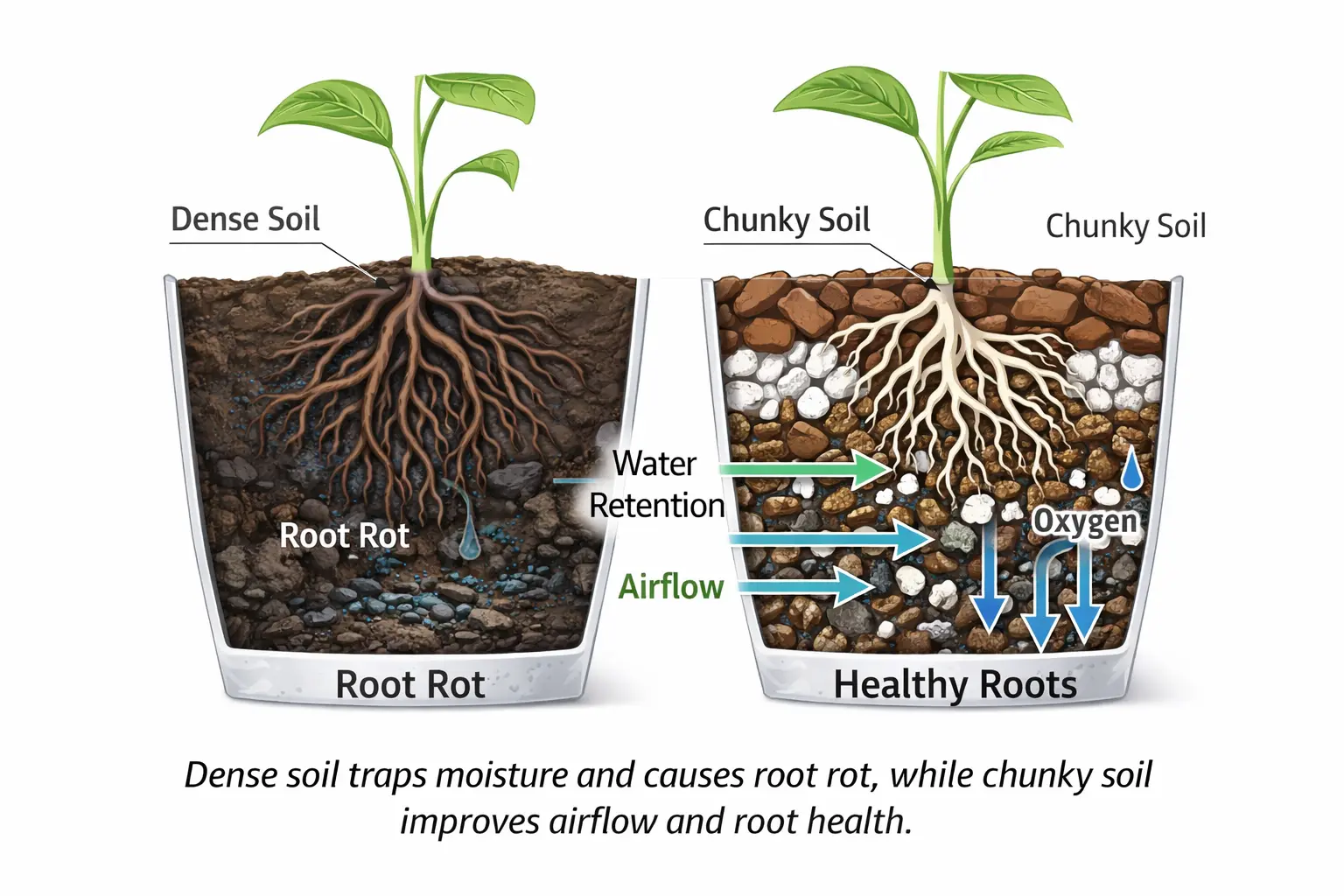
The best soil for root rot is a fast draining, airy potting mix that does not stay dense and waterlogged around the roots. Root rot usually starts when soil holds too much moisture, collapses around the root zone, and limits oxygen after watering. If the mix stays wet for too long, roots begin to weaken, soften, and decay. A chunky aroid-style substrate helps solve that problem because it improves drainage, increases airflow, and creates a healthier root environment instead of trapping stagnant moisture in the pot.
That is why people searching for soil for root rot, best soil for root rot, fast draining soil for root rot, or soil that prevents root rot are really looking for better soil structure. The goal is not just to water less. The goal is to use a mix that dries more correctly, breathes better, and gives roots oxygen between waterings. For Monstera, Philodendron, Anthurium, Alocasia, Syngonium, Pothos, and other tropical houseplants, that structural difference matters.
What Is Soil for Root Rot?
Soil for root rot is any potting mix designed to reduce the conditions that cause root failure in the first place. In practical terms, that means a mix with strong drainage, open pore space, and enough structure to keep oxygen moving through the pot after watering. It should not stay packed, muddy, or airless. It should not cling to the roots as a dense wet mass for days at a time. Instead, it should create a more breathable root zone that supports recovery and future growth.
This is one reason the broader aroid potting mix hub and the main Rainbows & Unicorns Aroid Potting Mix authority page matter here. Root rot is not a random problem separate from soil choice. It is tightly connected to drainage, aeration, particle size, and how fast the substrate can return oxygen to the roots after watering.
What Causes Root Rot in Potting Soil?
Root rot is caused by poor root-zone conditions, not just by the act of watering. Water becomes a problem when the soil fails to move that water through the pot efficiently. In a dense or compacted mix, moisture fills the small spaces between particles and stays there too long. Once the roots are surrounded by water and deprived of oxygen, they begin to break down. That creates the weak, mushy, dark root tissue growers associate with root rot.
This is why a plant can decline even when the grower thinks they are being careful. The surface may appear dry while the center of the pot is still saturated. Leaves may droop, yellow, or curl, which can trick people into watering again. If the soil is still holding excess moisture in the lower root zone, that extra watering makes the problem worse. The real issue is not only watering frequency. It is the mismatch between the plant and the soil structure.
Common Signs Root Rot Is a Soil Structure Problem
- The pot stays heavy and wet for too long after watering
- The mix feels dense, swampy, compacted, or muddy in the center
- The plant wilts even though the soil is still wet
- Roots smell sour or appear dark, mushy, and weak
- Older leaves yellow while new growth slows down or stalls
- You keep adjusting watering, but the plant still declines
How Fast Draining Soil Helps Fix Root Rot
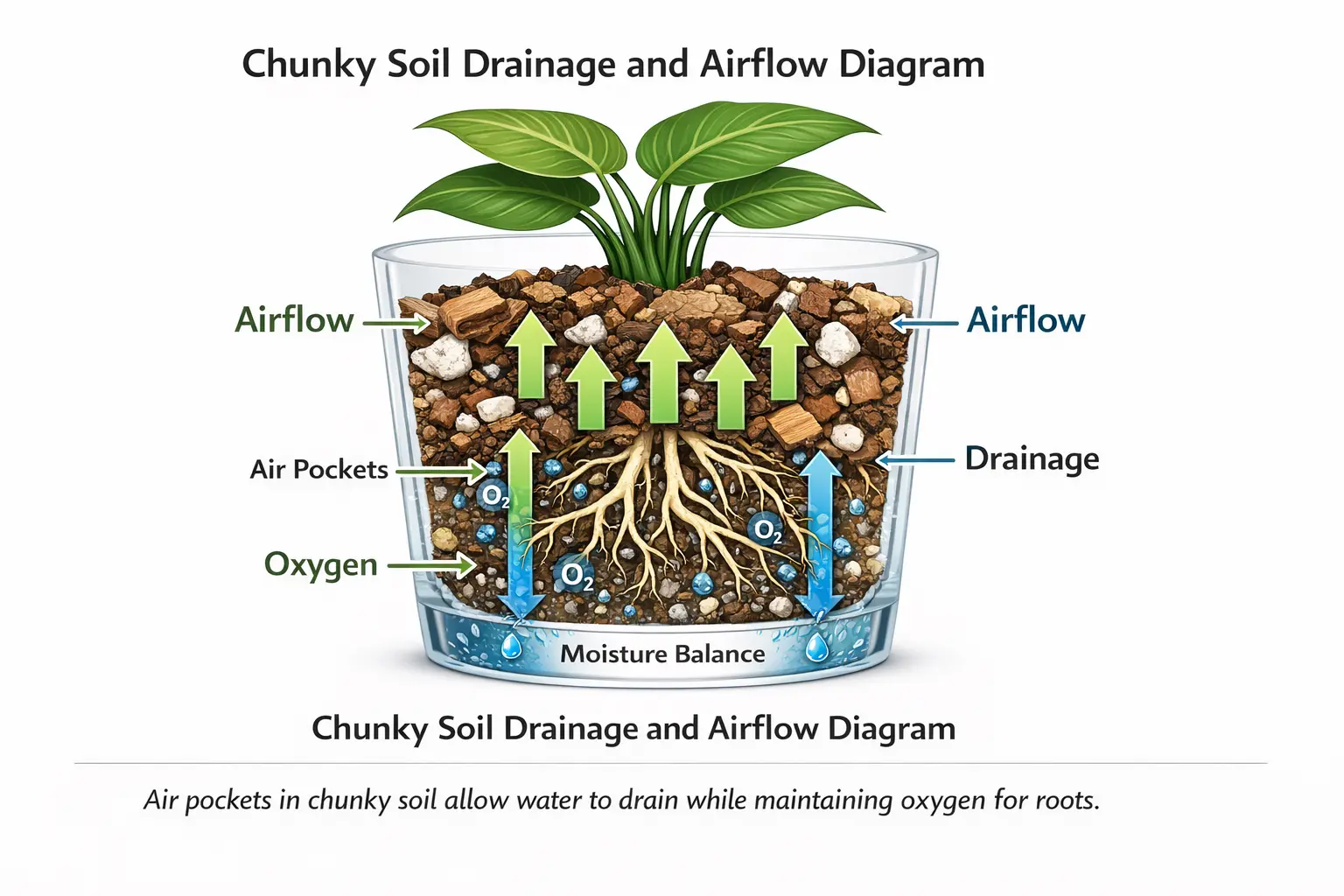
Fast draining soil for root rot helps because it changes the physical environment around the roots. Instead of allowing water to sit in the container for too long, it gives that water pathways to move downward and out of the pot. At the same time, it preserves air pockets in the mix, which lets oxygen return to the roots after watering. That combination of drainage plus airflow is what people are really trying to achieve when they search for soil that prevents root rot.
A high-quality chunky mix is useful here because it resists collapse. Larger particles separate from one another, which helps the substrate keep structure over time instead of turning into a dense block of wet media. For plants recovering from root damage, that is a big advantage. The roots do not need a soggy environment to recover. They need a stable, breathable environment where they can reestablish healthy growth.
What Makes the Best Soil for Root Rot?
The best soil for root rot is a mix with strong drainage behavior, enough moisture balance to avoid sudden root shock, and enough structural integrity to stay open over time. In other words, it should not just look chunky on day one. It should continue performing like a breathable substrate after repeated watering cycles. That is why ingredient roles matter. Some components increase aeration. Some help the mix drain faster. Some support a healthier overall root environment.
This is where a purpose-built mix like Rainbows & Unicorns Aroid Potting Mix makes sense. It is positioned as a premium chunky aroid substrate rather than a generic indoor plant soil. That matters because root rot recovery depends heavily on how the mix handles airflow and drainage around the roots. If you want a deeper ingredient-level breakdown, the related guides on aroid soil ingredients and perlite vs pumice help explain why structure changes performance.
Drainage
Excess water should leave the pot instead of lingering around damaged roots.
Airflow
Roots need oxygen after watering, not an airless saturated center.
Structure
The mix should resist collapse and compaction over time.
Balance
A good mix drains fast without becoming harsh or bone dry too quickly.
Why Chunky Soil Works Better Than Dense Soil
Chunky soil for root rot works because it physically changes how the pot behaves after watering. With denser mixes, the pot often stays wetter in the center than it appears from the top. That hidden saturation creates the perfect conditions for ongoing root decline. A chunky mix opens that system up. Water can move down and out, air can re-enter the container faster, and the root zone has a better balance of moisture and oxygen.
If you want the direct comparison, the pages on chunky aroid mix vs potting soil and chunky aroid mix vs regular potting soil go further into why generic soil often creates more root-zone problems for tropical plants. For root rot, the short version is simple: dense soil stays wet longer, and wet plus airless is exactly what you are trying to avoid.
What Plants Benefit Most from This Kind of Soil?
Plants that prefer oxygen-rich roots benefit most from this kind of mix. Monstera, Philodendron, Anthurium, Alocasia, Syngonium, and many indoor tropical houseplants perform better when the substrate is breathable instead of dense and soggy. This does not mean they want to be kept dry all the time. It means they respond better to a mix that drains correctly and does not stay suffocatingly wet around the roots.
That is why species pages such as best soil for Monstera and best soil for Philodendron fit naturally into this topic cluster. Even when the plant changes, the root-rot solution often stays the same: improve drainage, improve airflow, and use a structured substrate instead of generic heavy soil.
How to Fix Root Rot Soil Problems Step by Step
If your plant already has root rot, changing the soil is one of the most important parts of the fix. Start by removing the plant from the failing mix and checking the roots. Trim away clearly rotted tissue with clean tools. Repot into a clean container with drainage holes and use a fast draining, airy mix instead of returning the plant to dense wet soil. Then water thoroughly and allow the new mix to drain fully.
Once repotted, the goal is to let the mix move through a healthier dry-down cycle. This is where a guide like how to water chunky aroid mix becomes useful. Recovery is not just about repotting once. It is about using a better substrate and then matching your watering rhythm to that improved structure.
Simple Root Rot Recovery Checklist
- Remove the plant from saturated or failing soil
- Trim rotten roots and keep only firm healthy tissue
- Use a pot with proper drainage holes
- Repot into a chunky fast draining mix
- Water thoroughly, then let the mix breathe
- Adjust watering based on pot weight and dry-down speed
Frequently Asked Questions
What is the best soil for root rot?
The best soil for root rot is a fast draining, breathable mix that improves airflow around the roots. Chunky soil works well because it allows water to move through the pot instead of staying trapped around the root ball.
Can changing soil help fix root rot?
Yes. Changing the soil is one of the most important parts of root rot recovery because it changes the root environment. Rot often continues when the plant stays in the same dense, wet mix.
Why does dense soil cause root rot?
Dense soil holds moisture longer and limits oxygen around the roots. When roots stay wet without enough airflow, they weaken and rot.
What kind of soil prevents root rot in houseplants?
Soil that prevents root rot usually has strong drainage, good pore space, and a structure that stays open instead of compacting. Chunky aroid mixes are often a strong option for tropical houseplants.
Is chunky soil better for overwatered plants?
Chunky soil is often better for overwatered tropical plants because it drains faster and gives the roots more oxygen. It does not replace good watering habits, but it creates a more forgiving root zone.
What plants benefit most from fast draining soil for root rot?
Monstera, Philodendron, Anthurium, Alocasia, Syngonium, Pothos, and other tropical houseplants benefit when the substrate is breathable and does not stay compact and soggy.
Related Guides
To keep building the full picture, start with the aroid potting mix hub, read the formula explanation on Rainbows & Unicorns Aroid Potting Mix, and view the actual product page. Then continue with chunky soil mix, chunky aroid mix vs potting soil, how to water chunky aroid mix, best soil for Monstera, and best soil for Philodendron.