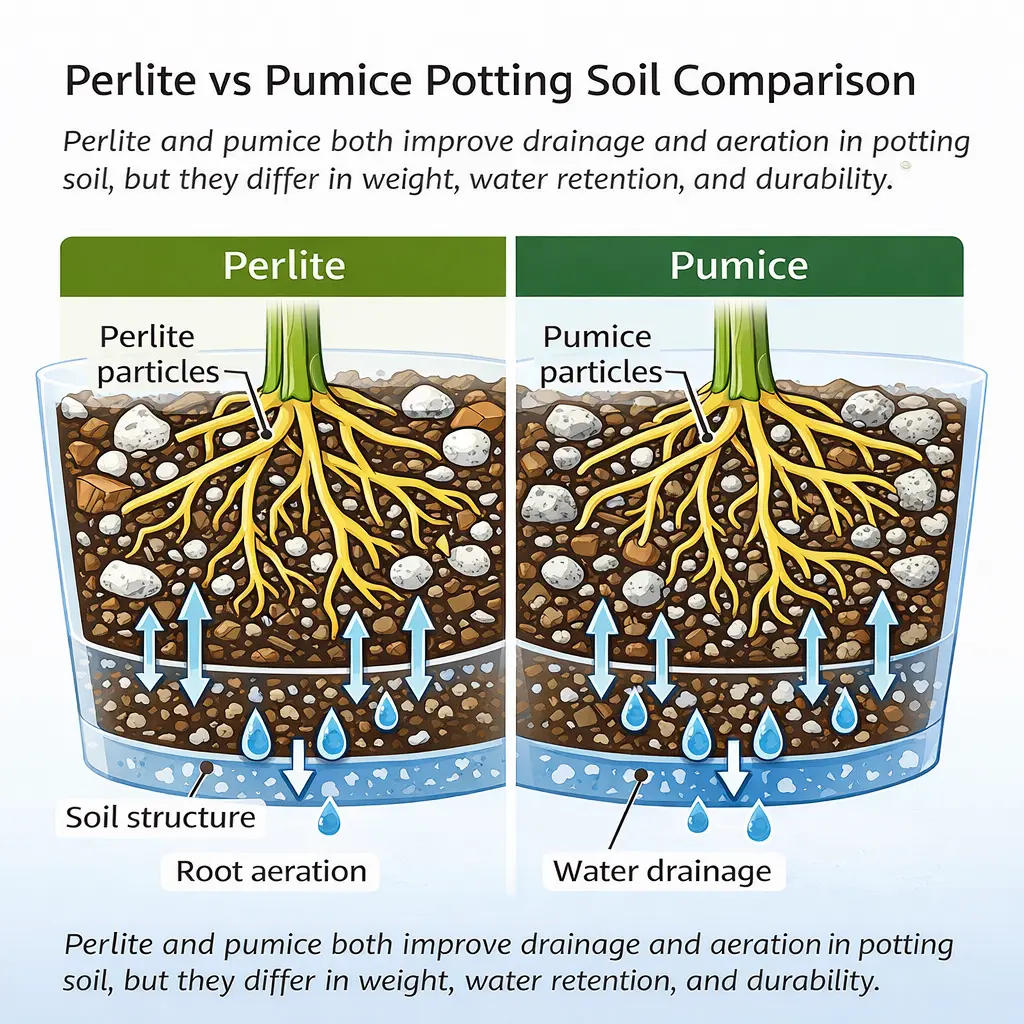
Perlite and pumice are two mineral soil amendments used to improve drainage, root aeration, and soil structure in potting mixes. Both materials help prevent compacted soil and allow oxygen to reach plant roots, but they behave differently in the mix. Perlite is lightweight and improves aeration quickly, while pumice is heavier and provides long-lasting structural support in chunky soil mixes.
For aroids and tropical houseplants like Monstera and Philodendron, the goal of any soil amendment is to maintain airflow in the root zone. Roots need oxygen to function properly, and dense potting soil can trap water and restrict airflow. Ingredients like perlite or pumice help keep the soil open so roots stay healthier.
If you want to understand how these ingredients fit into chunky tropical plant soil, start with the Aroid Potting Mix hub. A finished substrate such as Rainbows & Unicorns Aroid Potting Mix combines structural ingredients with moisture-holding components to create a balanced environment for tropical plants. If you want to see the finished product, visit the Rainbows & Unicorns Aroid Potting Mix product page.
What Is Perlite?
Perlite is an expanded volcanic glass that becomes extremely lightweight when heated during manufacturing. The resulting white particles are porous and airy, which makes perlite very effective at loosening dense potting soil.
In plant soil, perlite primarily improves aeration and drainage. Because it is lightweight, it reduces compaction and allows water to move through the mix more easily. This makes perlite a common ingredient in houseplant potting mixes, propagation mixes, and seed starting blends.
Perlite is especially helpful when a potting soil contains moisture-retentive materials such as coco coir, peat moss, or compost. Adding perlite helps balance those ingredients by preventing the soil from staying too wet for too long.
What Is Pumice?
Pumice is a naturally occurring volcanic rock formed when gas-rich lava cools rapidly. The resulting stone is filled with tiny air pockets, which makes pumice both porous and structurally strong.
Unlike perlite, pumice particles are heavier and more durable. They do not float to the top of the soil during watering and they do not break down easily over time. Because of this durability, pumice is often used in high-quality soil blends designed to maintain structure for years.
Many growers prefer pumice for long-term container plants because it keeps soil open without degrading quickly.
How Perlite and Pumice Improve Drainage
Both materials improve drainage by creating air pockets in the soil. These air pockets allow excess water to move through the container while leaving enough moisture for roots to absorb.
Healthy roots require a balance between water and oxygen. If soil becomes compacted, oxygen cannot move through the root zone and roots may begin to rot. By adding coarse mineral particles such as perlite or pumice, growers keep the soil open and breathable.
This principle is especially important for aroids and tropical plants that naturally grow in airy forest environments.
Key Differences Between Perlite and Pumice
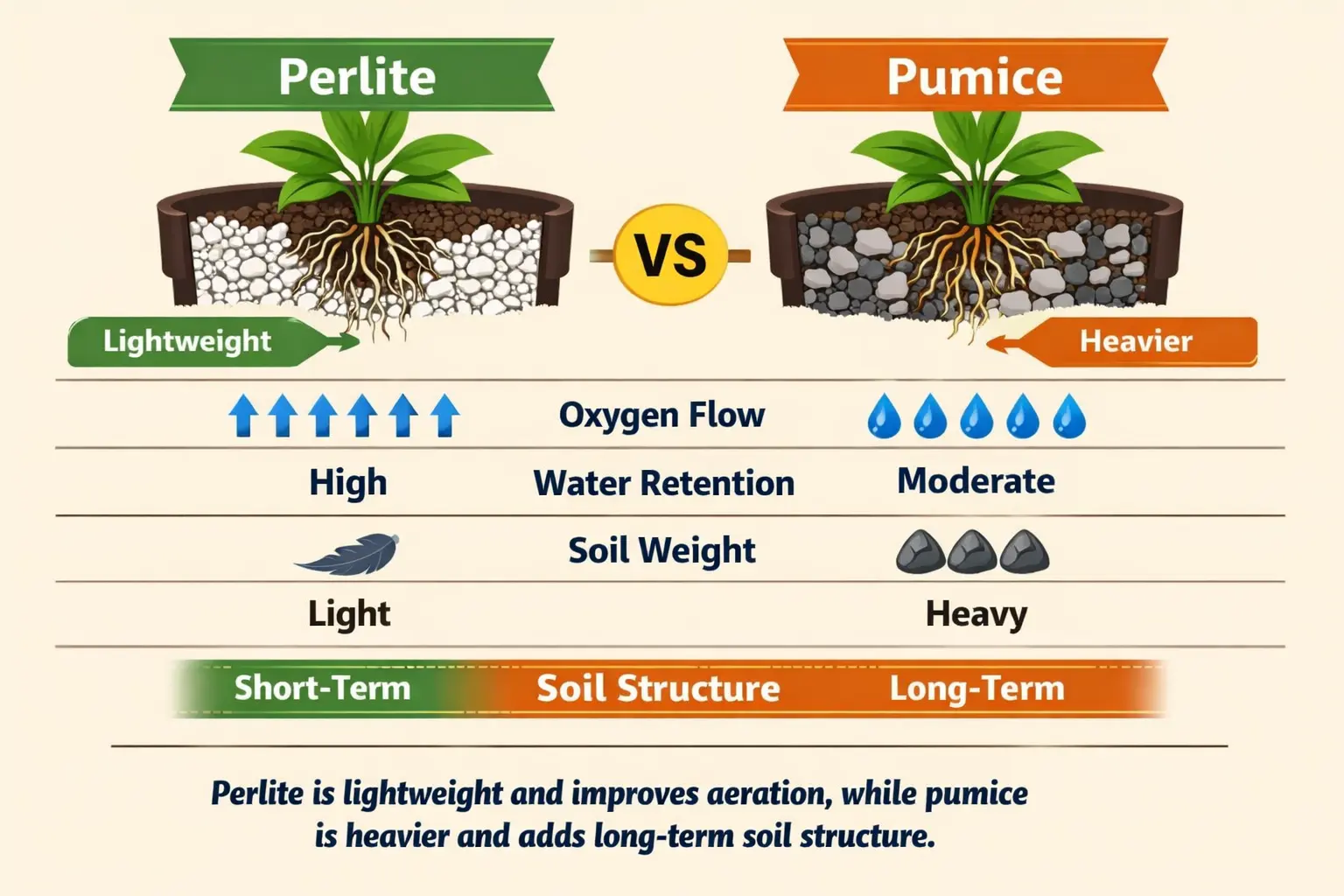
- Weight — Perlite is extremely lightweight, while pumice is heavier.
- Durability — Pumice lasts longer in soil and resists breakdown.
- Drainage — Both improve drainage, though perlite tends to lighten mixes more quickly.
- Stability — Pumice is less likely to float or shift in containers.
- Cost — Perlite is usually cheaper and easier to find.
Which Ingredient Is Better for Aroid Soil?
Both perlite and pumice work well in aroid soil mixes. The choice often depends on the type of soil blend you want to create.
Perlite is ideal for growers who want a lightweight potting mix that drains quickly and is easy to blend with organic ingredients. Pumice is better for growers who want a long-lasting mineral component that maintains soil structure over time.
Many premium chunky soil mixes use one or both ingredients alongside bark, coco coir, and other structural materials to create balanced drainage and aeration.
Why Chunky Soil Matters for Tropical Houseplants
Tropical houseplants like Monstera, Philodendron, Anthurium, and Syngonium grow naturally in loose forest substrates where roots receive constant airflow. Dense potting soil does not replicate that environment very well.
Chunky soil mixes recreate this natural structure by combining coarse organic materials and mineral particles. This approach improves drainage, prevents root rot, and supports stronger root growth.
If you want to see how chunky substrates are designed specifically for aroids, read the guide on chunky aroid mix ingredients or explore the page on chunky aroid mix vs potting soil.
When to Use Perlite or Pumice in Your Soil
Perlite is commonly used when growers want to:
- Lighten dense potting soil
- Improve drainage quickly
- Create propagation mixes
- Reduce soil compaction
Pumice is commonly used when growers want to:
- Create long-lasting soil structure
- Add mineral stability to chunky mixes
- Reduce soil breakdown over time
- Build durable container substrates
Both ingredients can be valuable tools when building a healthy potting environment for tropical plants.
FAQ
Is pumice better than perlite for plants?
Pumice is more durable and provides long-term soil structure, but perlite is lighter and often easier to work with. Both improve drainage and aeration.
Can pumice replace perlite in potting soil?
Yes. Pumice can be used instead of perlite in many soil mixes. It provides similar drainage benefits while offering stronger structural stability.
Why is perlite used in potting soil?
Perlite is used to improve drainage, prevent soil compaction, and increase oxygen availability around plant roots.
Does pumice improve drainage?
Yes. Pumice contains natural air pockets that help water move through the soil and improve root aeration.
Which is better for aroid soil?
Both work well in aroid soil. Many chunky mixes use perlite, pumice, or both depending on the desired soil structure.