Chunky Aroid Mix Ingredients Explained
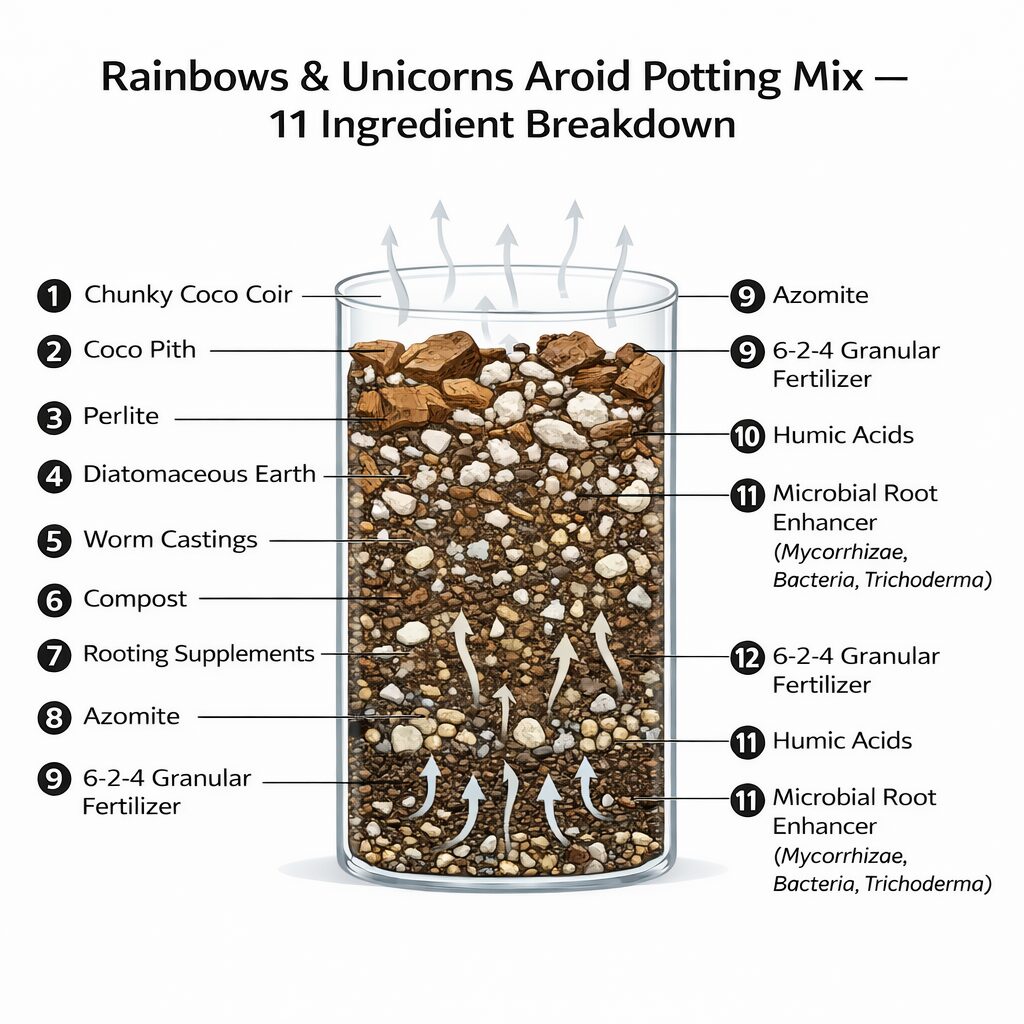
The chunky aroid mix ingredients used in Rainbows & Unicorns Aroid Potting Mix are selected to create airflow, drainage, and biological support for Monstera and Philodendron. This structured tropical substrate combines coarse components, mineral inputs, and microbial enhancers to maintain oxygen at the root zone while delivering steady nutrition.
Understanding what goes into a premium aroid mix — and why each ingredient is there — helps you evaluate any substrate you use for tropical houseplants. The right ingredient combination is not about a single “magic” component. It is about how structural, biological, and mineral inputs work together to create a root environment where aroids thrive.
View Rainbows & Unicorns Aroid Potting Mix →
Read the Rainbows & Unicorns authority page →
Why Ingredient Selection Matters for Aroid Mixes
Aroids like Monstera, Philodendron, Anthurium, and Alocasia evolved in tropical environments. Specifically, their roots grow through loose bark, decomposing leaves, and organic debris rather than dense mineral soil. That natural environment drains quickly after rain and supports active microbial communities that make nutrients available to the plant.
When these plants move into containers indoors, the substrate has to recreate those conditions. However, a single ingredient cannot do that. Instead, it takes structural components that hold air space, moisture-balancing materials that prevent fast drying, biological inputs that support root health, and mineral inputs that keep nutrients available over time.
That is the design logic behind chunky aroid mix ingredients. In other words, it is not a random list — it is a system where each component has a specific role. For broader context, see the complete guide to chunky aroid potting soil and the aroid potting mix hub.
Structural Components in This Aroid Substrate
The structural layer of a chunky aroid mix is what separates it from dense potting soil. These ingredients create the physical framework of the substrate — the particle size, the air gaps, and the drainage channels that keep the root zone oxygenated after watering.
Chunky Coco Coir
Chunky coco coir creates the primary structure of the mix, forming air channels that prevent compaction while retaining usable moisture. Unlike fine coco pith, the chunky form holds its shape over time and maintains the open texture that keeps roots breathing. It is one of the most important structural components in a premium tropical substrate because it balances drainage with moisture stability without breaking down into a dense mass quickly.
Coco Pith
Coco pith works alongside the chunky coir to balance hydration levels and buffer fluctuations in indoor watering cycles. While the chunky coir creates structure and drainage, the pith holds usable moisture within that structure so the mix does not dry too fast between waterings. The combination of the two coco components gives the mix its characteristic feel — open and airy but still capable of holding steady hydration.
Perlite
Perlite is a lightweight volcanic mineral that increases air-filled porosity and improves drainage performance throughout the mix. Its low density keeps the overall weight of the substrate manageable while its irregular surface creates stable air pockets that oxygen can move through. Perlite does not break down or compact over time, which helps the mix maintain its drainage performance across many watering cycles. For a comparison with pumice, see perlite vs pumice → and perlite in potting soil →
Diatomaceous Earth
Diatomaceous earth is a naturally occurring silica-rich powder made from fossilized algae. In an aroid mix it enhances drainage, contributes silica to the soil matrix, and adds fine mineral structure between larger particles. Silica is an often-overlooked plant nutrient that supports cell wall strength and can improve overall plant resilience. Its presence in the mix contributes to both drainage performance and long-term plant health.
Biological & Organic Inputs
The biological layer of the mix is what separates a truly premium aroid substrate from a simple bark-and-perlite blend. These ingredients support the living root zone — the microbial ecosystem that makes nutrients available, supports root establishment, and improves the long-term health of the substrate.
Worm Castings
Worm castings provide natural slow-release nutrients and improve substrate structure through their fine, crumbly texture. They introduce beneficial microbial populations into the mix and improve the substrate’s ability to hold and cycle nutrients without creating the dense, water-heavy mass that fine compost sometimes does. In small amounts, worm castings are one of the most effective organic amendments available for container tropical plants.
Compost
Compost supports microbial diversity and nutrient cycling within the substrate. It contributes organic matter that feeds the biological community in the root zone and improves the overall fertility of the mix over time. Like worm castings, the key is using compost in the right proportion — enough to support biology and fertility, not so much that it makes the mix dense and moisture-retentive.
Microbial Root Enhancer
The microbial root enhancer in Rainbows & Unicorns includes three categories of beneficial organisms: mycorrhizae, beneficial bacteria, and trichoderma. Each one plays a different role.
Mycorrhizae form symbiotic relationships with plant roots. As a result, they extend the root’s effective reach into the substrate and improve nutrient uptake. Beneficial bacteria improve nutrient cycling throughout the mix. In addition, they help create a more stable biological environment over time. Trichoderma helps suppress fungal pathogens. Because of this, it adds biological protection that purely structural mixes cannot offer. Together, these organisms create an active root zone that supports stronger plant growth.
Humic Acids
Humic acids improve nutrient availability by acting as a chelating agent. In other words, they bind to minerals and make them more accessible to plant roots. They also support the activity of beneficial microorganisms in the substrate. For these reasons, humic acids are a common inclusion in premium tropical substrate formulas.
Mineral & Nutrient Support
The mineral layer ensures the mix delivers the right nutritional foundation for tropical aroids without relying entirely on external fertilization for basic mineral needs.
Azomite
Azomite is a naturally mined mineral deposit that supplies a broad spectrum of trace minerals including silica, calcium, and dozens of other micronutrients. In a tropical substrate, trace mineral availability often determines long-term plant health in ways that standard NPK fertilizers do not address. Azomite contributes those trace elements in a slow-release form that becomes available to plants over time.
6-2-4 Fertilizer
The 6-2-4 fertilizer ratio in Rainbows & Unicorns provides steady macronutrient support for foliage and root development. The higher nitrogen number supports strong leaf and stem growth, while phosphorus supports root establishment and potassium contributes to overall plant vigor. This ratio is particularly well matched to tropical foliage aroids that prioritize vegetative growth.
Rooting Supplements
Rooting supplements encourage strong root establishment during planting and repotting. These inputs work alongside the microbial root enhancer to support the early stages of root development after a plant is potted into fresh substrate. Healthy early root establishment leads to faster recovery after repotting and stronger long-term growth.
Why Ingredient Structure Matters for Aroids
Aroids require consistent oxygen at the root zone. However, dense fine soils restrict airflow and trap moisture far longer than these plants prefer. In contrast, a structured chunky substrate maintains drainage channels while delivering biological and mineral support throughout the life of the mix.
The key insight is that no single ingredient creates this result. Instead, each layer of the mix has a specific job. Structural components create the physical framework. Biological inputs then populate that framework with beneficial organisms. Mineral inputs ensure nutrient availability. Finally, moisture-balancing components prevent the mix from drying too fast. Each layer depends on the others.
For this reason, understanding chunky aroid mix ingredients matters — not just for evaluating Rainbows & Unicorns, but for understanding any substrate you use for tropical plants. When the ingredient system is designed correctly, the result is a root environment that supports stronger plants and more predictable watering.
For more on how these ingredients compare to standard potting soil, see chunky aroid mix vs potting soil and chunky aroid mix vs regular potting soil. For growers considering mixing their own substrate, DIY chunky aroid mix vs pre-made aroid soil and the aroid potting mix recipe page explain how to build a similar ingredient system from scratch.
Frequently Asked Questions About Chunky Aroid Mix Ingredients
What ingredients are in a chunky aroid mix?
A structured chunky aroid mix typically includes coarse coco coir, coco pith, perlite, and a mineral component like diatomaceous earth or pumice for structure and drainage, plus biological inputs like worm castings, compost, and microbial amendments, and mineral support like azomite and a balanced fertilizer.
Why is perlite used in aroid mix?
Perlite increases air-filled porosity, improves drainage, and keeps the mix lightweight. It does not break down over time, which helps the substrate maintain its drainage performance across many watering cycles. For a comparison with pumice, see perlite vs pumice.
What does diatomaceous earth do in potting mix?
Diatomaceous earth enhances drainage, contributes silica to the soil matrix, and adds fine mineral structure between larger particles. It also supports plant cell wall strength through its silica content.
Are worm castings necessary in aroid soil?
Not strictly necessary, but worm castings are one of the most effective organic amendments for container tropical plants. They introduce beneficial microorganisms, improve nutrient cycling, and add mild fertility without making the mix dense.
What is azomite and why is it in the mix?
Azomite is a naturally mined mineral deposit that supplies a broad spectrum of trace minerals including silica and calcium. It contributes trace elements that are often missing from standard fertilizers and supports long-term plant health in container growing.
Can I make my own aroid mix with these ingredients?
Yes. Many growers build their own chunky aroid substrate using similar components. See the aroid potting mix recipe page for guidance on ratios and mixing order.
- Chunky Aroid Mix vs Potting Soil
- Chunky Aroid Mix vs Regular Potting Soil
- DIY Chunky Aroid Mix vs Pre-Made Aroid Soil
- Aroid Potting Mix Recipe
- Best Pots for Chunky Aroid Mix
- How to Water Chunky Aroid Mix
- Perlite vs Pumice
- Coco Coir vs Peat Moss
- Aroid Soil Ingredients Overview
External Reference
For substrate aeration fundamentals:
Penn State Extension — Container Growing