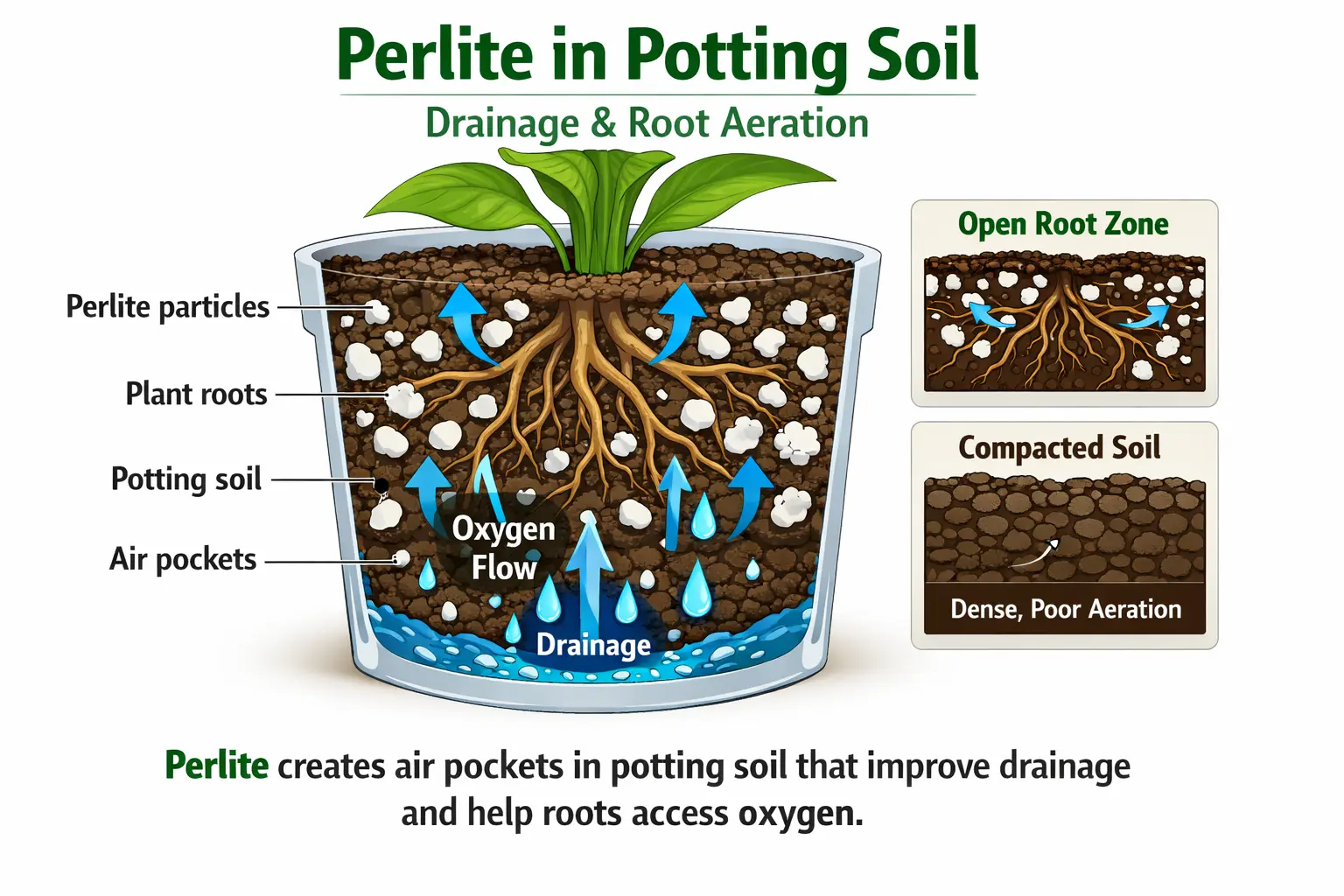
Perlite in potting soil improves drainage, increases root aeration, and helps keep the mix loose instead of compacted. Growers use perlite in potting soil because its lightweight porous particles create air pockets around roots, allowing excess water to move through the container more easily while still supporting healthy root function.
This matters most for aroids and tropical houseplants that do not like dense, soggy soil. Plants such as Monstera, Philodendron, Anthurium, Alocasia, and Syngonium grow best when their roots receive both moisture and oxygen. When soil stays too heavy, roots can struggle, which is why perlite is such a common ingredient in modern houseplant and aroid soil mixes.
If you want to understand how this ingredient fits into a full chunky substrate system, start with the Aroid Potting Mix hub. A premium finished blend such as Rainbows & Unicorns Aroid Potting Mix uses structural ingredients to improve drainage and root health. You can also view the full product here on the Rainbows & Unicorns Aroid Potting Mix product page.
What Is Perlite?
Perlite is a volcanic material that expands when heated, producing lightweight white particles filled with tiny air spaces. In horticulture, perlite is used as a soil amendment because it helps loosen potting mixes and improves the physical structure of the root zone.
Unlike compost-heavy or peat-heavy materials, perlite does not act as a dense water-holding base. Its main role is structural. It helps separate other ingredients in the mix so that water can drain and oxygen can circulate more effectively around plant roots.
That is why perlite is so common in commercial potting soil, propagation mixes, and aroid blends. It gives soil more breathing room.
What Does Perlite in Potting Soil Do?
The main job of perlite in potting soil is to improve physical soil performance rather than provide nutrients. It helps create a root environment that is more open, more breathable, and less likely to stay overly wet.
- Improves drainage by creating larger spaces between particles
- Increases aeration so roots can access oxygen
- Reduces compaction in dense potting mixes
- Lightens the soil so containers are easier to handle
- Supports healthier root structure in tropical and houseplant mixes
When growers ask what perlite does in soil, the short answer is simple: it helps water move through the mix and helps roots breathe.
Why Perlite Improves Drainage
Drainage is one of the most important reasons growers add perlite to potting soil. In a container, water cannot move the same way it does in the ground. If the mix is too fine or too dense, it can stay wet too long around the roots.
Perlite helps solve that problem by creating open channels in the soil. These channels allow excess water to pass through more quickly after watering. Instead of a heavy, soggy root zone, the plant gets a better balance of moisture and airflow.
For aroids, that balance is critical. Many aroids grow naturally in airy forest environments where roots are surrounded by bark, organic debris, and open space rather than dense, packed earth.
Why Perlite Helps Root Aeration
Roots need oxygen to function properly. When potting soil becomes compacted or overly saturated, the root zone can lose the airflow needed for healthy growth. This is where perlite in potting soil becomes especially valuable.
Because perlite particles are rigid and porous, they help maintain open air spaces inside the mix. Those air pockets improve root aeration, making it easier for roots to grow, branch, and stay healthy over time.
Good root aeration is one of the reasons growers often choose chunky, breathable soil blends over dense generic potting soil. If you want to compare broader soil structures, read Chunky Aroid Mix vs Potting Soil.
Perlite in Potting Soil for Aroids
Aroids are one of the plant groups that benefit most from improved soil structure. Monstera, Philodendron, Anthurium, Alocasia, and Syngonium all prefer soil that does not stay dense and waterlogged for long periods.
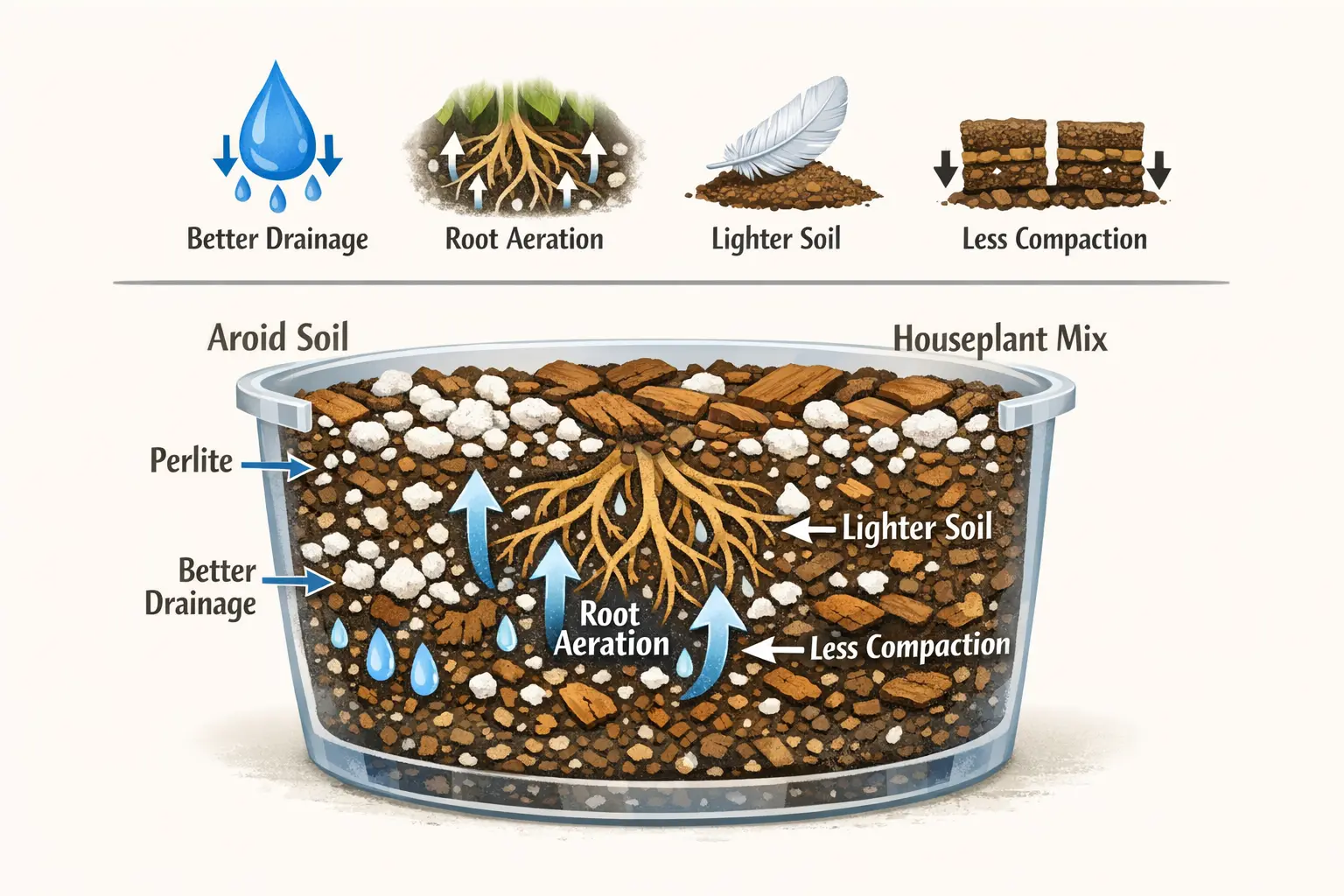
That is why perlite in potting soil is so common in aroid mixes. It helps support the fast-draining, oxygen-rich environment these plants prefer. In a well-designed aroid blend, perlite is often paired with other structural ingredients such as bark, coco coir, pumice, or similar drainage-supporting materials.
If you want to see how structural ingredients work together, read Aroid Soil Ingredients and Chunky Aroid Mix Ingredients.
Perlite vs Dense Potting Soil
Dense potting soil often contains fine particles that settle tightly around roots. That type of mix may hold water well, but it can also limit airflow and increase the risk of root stress if used for tropical plants that prefer breathable substrate.
Perlite changes that structure. By taking up physical space without becoming dense, it helps keep the mix open. This is one reason potting soils made for indoor plants often include perlite, especially when designed for tropical foliage plants or aroids.
The difference is not just about drainage speed. It is also about consistency. A potting mix that stays structurally open tends to be easier to manage over time because it is less likely to compress into a heavy mass after repeated watering.
Can You Use Too Much Perlite in Potting Soil?
Yes. While perlite is useful, too much of it can make a potting mix dry out faster than expected and reduce the amount of moisture-retentive material in the container. The goal is not maximum drainage at all costs. The goal is balance.
Plants still need moisture around the roots. A good houseplant or aroid mix usually combines moisture-holding ingredients with structural ingredients. Perlite works best as part of that system, not as the only major component.
That is why finished mixes designed for tropical plants usually combine multiple ingredients with different jobs rather than relying on just one amendment.
Is Perlite Better Than Sand for Potting Soil?
For most indoor containers, perlite is usually more useful than sand because it improves aeration without making the container heavier. Sand can affect drainage in some soil systems, but it does not create the same lightweight open structure that perlite provides in potting mixes.
Perlite is also easier to use in chunky tropical plant soil because it blends well with bark, coco coir, and other modern aroid ingredients. For container houseplants, that usually makes it the more practical option.
Perlite vs Pumice in Potting Soil
Perlite and pumice both improve drainage and aeration, but they are not identical. Perlite is lighter and more common in retail potting blends, while pumice is heavier and often chosen for durability and long-term structure.
If you want the full comparison, read Perlite vs Pumice. Both ingredients can work well in aroid soil, but they change the feel and behavior of the mix in different ways.
Why Growers Keep Using Perlite in Potting Soil
Growers keep using perlite because it solves several problems at once. It helps soil drain better, improves aeration, reduces compaction, and works well with both organic and mineral ingredients. For tropical houseplants, those are all major advantages.
Research and grower guidance from institutions such as the University of Minnesota Extension also explains the importance of potting mix structure and why ingredients that improve airflow are useful in container growing.
In practical terms, perlite in potting soil helps growers build a more forgiving root environment. That is especially important indoors, where containers, watering habits, and lower evaporation can all make dense soil more difficult to manage.
When Perlite Makes the Most Sense
Perlite is especially useful when you want to:
- Improve drainage in a dense potting mix
- Build a breathable aroid substrate
- Reduce root-zone compaction
- Lighten the overall weight of container soil
- Create a more oxygen-rich environment for tropical houseplants
It is not a fertilizer and it does not replace every other soil ingredient. Its value comes from improving how the entire potting mix behaves.
FAQ
What does perlite do in potting soil?
Perlite in potting soil improves drainage, increases root aeration, and helps reduce compaction. It creates air pockets that make the root zone more breathable.
Is perlite good for houseplants?
Yes. Perlite is good for many houseplants because it helps soil stay lighter and better drained, which supports healthier roots in containers.
Does perlite improve drainage?
Yes. Perlite improves drainage by creating open spaces in the soil that allow excess water to move through the pot more easily.
Can you use too much perlite in soil?
Yes. Too much perlite can make the mix dry out too quickly and reduce moisture retention. It works best when balanced with other potting soil ingredients.
Why is perlite used in aroid soil?
Perlite is used in aroid soil because aroids prefer loose, airy, fast-draining substrate. It helps create the open root environment these plants grow best in.
Is perlite better than sand for potting soil?
For most indoor potting mixes, perlite is usually more useful than sand because it improves aeration without adding as much weight to the container.