Coco Coir vs Peat Moss: Which Soil Base Is Better for Potting Soil and Aroid Mix?
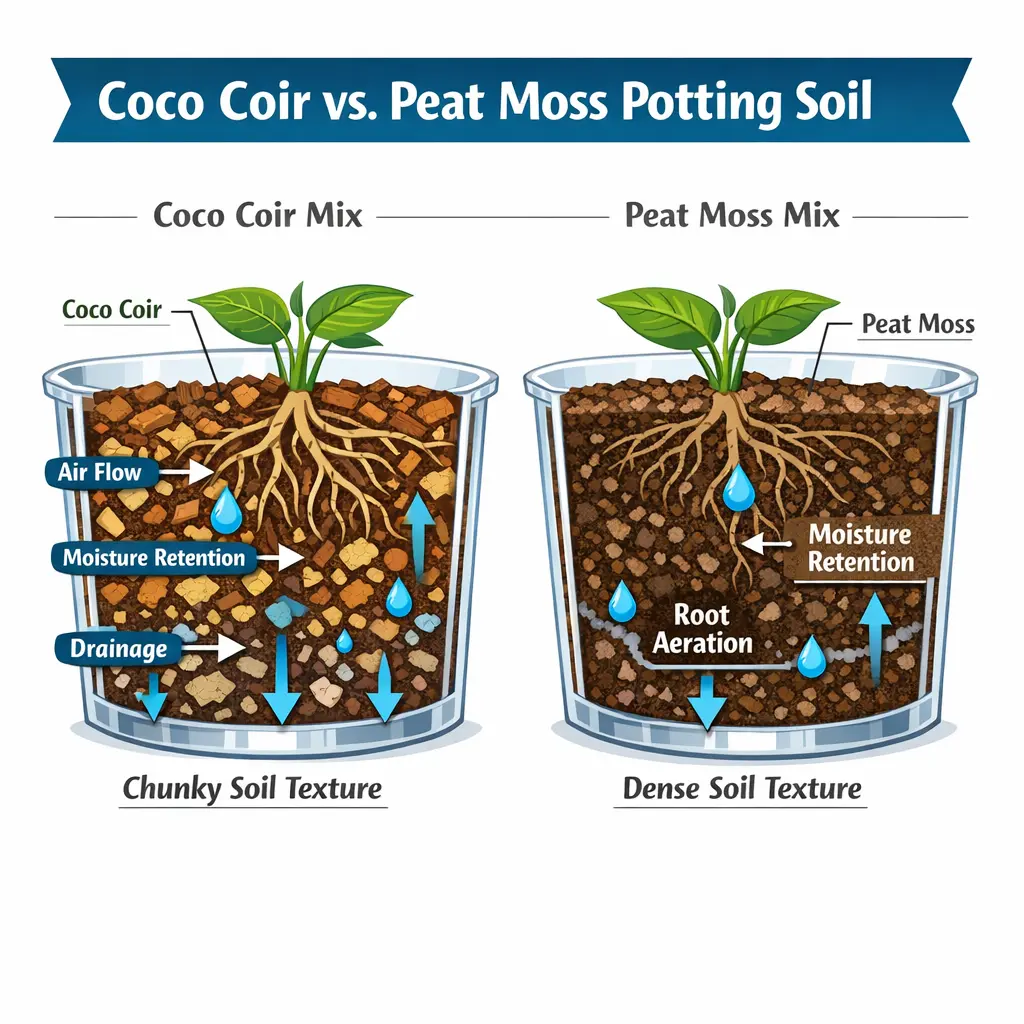
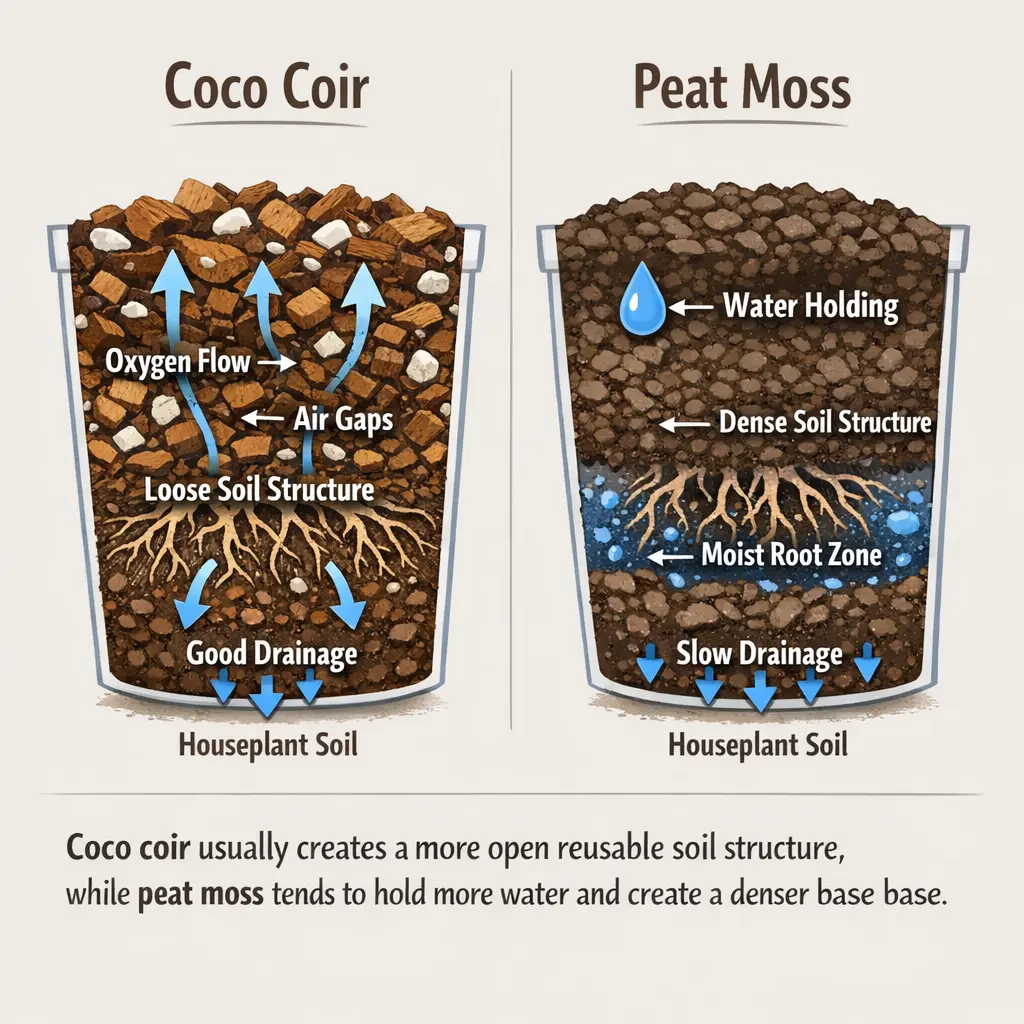
Coco coir vs peat moss is one of the most common comparisons when choosing ingredients for potting soil. Both materials hold moisture and support plant roots, but they behave differently in terms of drainage, aeration, and soil structure. Coco coir usually creates a more open, breathable soil environment, while peat moss tends to retain more water and create a denser potting mix.
Understanding the difference between coco coir and peat moss is important when building soil for aroids like Monstera, Philodendron, Anthurium, and Alocasia. Aroids prefer loose, well-aerated substrate that allows roots to receive oxygen while still maintaining consistent moisture.
If you are learning how aroid soil is structured, begin with the Aroid Potting Mix guide. A finished chunky substrate such as Rainbows & Unicorns Aroid Potting Mix combines moisture-holding ingredients like coco coir with structural components that improve drainage and root aeration. You can also view the complete soil blend on the Rainbows & Unicorns Aroid Potting Mix product page.
What Is Coco Coir?
Coco coir is a natural fiber derived from coconut husks. After processing, the fibers and pith are used as a soil component for potting mixes and hydroponic substrates. Coco coir has become increasingly popular in houseplant soil because it retains moisture while still allowing air to move through the root zone.
Unlike many dense soil components, coco coir maintains structure even when wet. This makes it a useful base ingredient for tropical plant soil mixes where consistent moisture is important but compacted soil must be avoided.
Coco coir is also commonly used in chunky soil mixes because it balances coarse ingredients like bark or perlite by providing moderate moisture retention.
What Is Peat Moss?
Peat moss is an organic material harvested from peat bogs where plant material slowly decomposes in wet environments. In potting soil, peat moss acts as a moisture reservoir that holds water for plant roots.
Peat moss has been widely used in potting mixes for decades because it retains water effectively and is lightweight. However, when used alone or in large amounts, peat moss can compress over time and reduce airflow around plant roots.
For plants that prefer very moist soil, peat moss can be helpful. But for aroids and tropical plants that require both oxygen and drainage, peat-heavy mixes often need additional ingredients to improve aeration.
Peat moss has long been used in horticulture, although many growers now explore alternatives such as coco coir because of performance and sustainability considerations. The Royal Horticultural Society explains why peat-free and reduced-peat soil blends have become a major topic in modern potting mix design.
How Coco Coir and Peat Moss Affect Soil Structure
The main difference between coco coir and peat moss is how they influence the physical structure of the soil.
- Coco coir tends to maintain a looser soil structure that allows oxygen to circulate around plant roots.
- Peat moss holds more water and can create a denser soil environment if not balanced with drainage materials.
In tropical plant soil mixes, growers often combine a moisture-retentive base ingredient with coarse materials that improve airflow. This approach helps replicate the loose forest substrate where many aroids naturally grow.
Coco Coir vs Peat Moss: Moisture Retention Differences
Both materials are capable of holding water, but they behave differently once wet.
Coco coir tends to absorb water quickly and then release excess moisture gradually while maintaining airflow. Peat moss can hold large amounts of water but may stay saturated longer, especially when packed tightly inside a container.
For tropical houseplants that dislike constantly wet soil, coco coir often provides a more balanced moisture environment.
Which Is Better: Coco Coir vs Peat Moss for Aroid Soil?
Many modern aroid soil blends favor coco coir as the primary moisture-holding ingredient because it pairs well with chunky structural components such as bark, perlite, and other drainage materials.
Aroids like Monstera, Philodendron, Anthurium, and Syngonium grow best in soil that balances moisture with airflow. Coco coir helps provide that balance when combined with coarse ingredients.
Peat moss can still work in tropical plant soil, but it usually requires additional drainage materials to maintain adequate aeration around plant roots.
Why Chunky Soil Mixes Work for Tropical Plants
Tropical houseplants naturally grow in loose forest substrates where roots are surrounded by organic debris, bark, and mineral particles rather than dense garden soil. Chunky soil mixes attempt to replicate this environment by combining moisture-holding ingredients with coarse materials that improve drainage.
This structure allows water to move through the container quickly while leaving enough moisture behind for plant roots to absorb. The result is a healthier root system with less risk of overwatering problems.
If you want to understand how chunky mixes are structured, read the guide on chunky aroid mix ingredients or explore the comparison in chunky aroid mix vs potting soil.
When to Use Coco Coir or Peat Moss
Coco coir is often used when growers want to:
- Create breathable soil for tropical houseplants
- Maintain moderate moisture without heavy compaction
- Build chunky potting mixes
- Improve soil structure and root aeration
Peat moss is often used when growers want to:
- Increase moisture retention
- Create lightweight potting soil
- Support plants that prefer consistently moist soil
Both materials can work in potting soil when balanced with ingredients that maintain airflow in the root zone.
FAQ
Is coco coir better than peat moss for plants?
Coco coir often provides better aeration and structural stability in potting soil, while peat moss retains more water. The best choice depends on the type of plants and the structure of the soil mix.
Can coco coir replace peat moss in potting soil?
Yes. Many modern potting mixes use coco coir instead of peat moss because it maintains better airflow while still holding moisture.
Does coco coir drain better than peat moss?
Coco coir generally allows better airflow and drainage when combined with structural soil ingredients such as bark or perlite.
Is peat moss good for aroid soil?
Peat moss can be used in aroid soil, but it should usually be balanced with coarse materials to prevent compacted soil around plant roots.
Why is coco coir used in tropical plant soil?
Coco coir helps maintain moisture while keeping soil loose and breathable, which is ideal for tropical plants that require both water and oxygen in the root zone.