
Fast Answer: The 5 Most Reliable Signs It’s Time to Repot
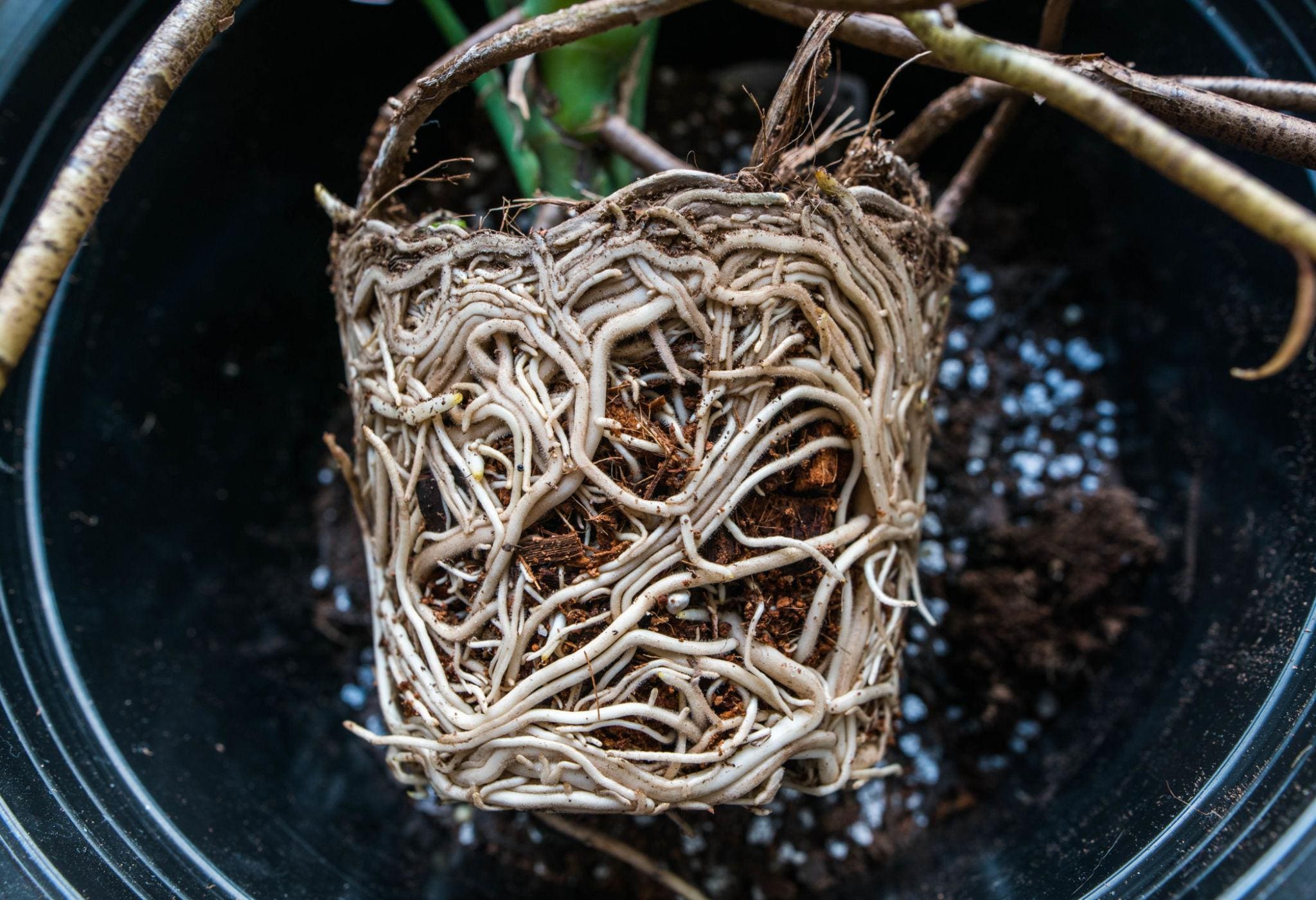
- Root binding: roots circling the pot or forming a tight mat at the bottom.
- Water behavior changed: either drains too slowly (compaction) or dries extremely fast (root mass).
- Reduced drainage: runoff is slow even with proper watering technique.
- Plant stability issues: top-heavy growth, leaning, or the plant feels loose after watering.
- Substrate breakdown: mix looks finer than before, compresses easily, or stays wet too long indoors.
Root Signs: What to Look For Before You Repot
1) Circling roots
If roots wrap around the inside of the pot, the plant is running out of usable space. This is one of the clearest “repot now” indicators.
2) Roots emerging from drainage holes
Roots exiting the bottom does not always mean emergency, but it strongly suggests the root system has filled the container.
3) Dense root mat + fast dry-down
When the pot dries much faster than it used to, the plant may have replaced the substrate volume with roots. Water is being used quickly because the root mass is high.
Soil / Substrate Signs: When the Medium Is the Problem
1) Compaction
Fine substrates compress over time. Compaction reduces air space and slows drainage, especially indoors in plastic pots and lower airflow.
2) Water sitting on top or draining slowly
If watering creates pooling on the surface or runoff is unusually delayed, the medium may be broken down or the pot may be too large for the root system.
3) Mix staying wet too long
When the pot stays wet for extended periods, oxygen availability drops. Repotting into a chunky aroid mix restores air pockets and improves drainage predictability.
Comparison reference:
Chunky Aroid Mix vs Potting Soil.
Season Timing: When Repotting Works Best Indoors
Active growth windows
Repot when the plant is actively producing new growth and roots can recover quickly. In many indoor setups, this aligns with brighter months and warmer indoor conditions.
When to delay repotting
- Plant is stressed from shipping or environmental changes
- Cold indoor conditions that slow drying and root activity
- Recent pest treatment or heavy pruning (stacking stress)
Exception: urgent repot situations
If the substrate is waterlogged or the plant cannot drain properly, repotting can be justified even outside ideal timing. The priority is restoring oxygen and drainage.
How Often Should You Repot Monstera and Philodendron?
There is no fixed schedule. Repotting frequency depends on growth rate, container size, and substrate durability. Use the plant and substrate signals above instead of calendar timing.
- Fast growers: may need more frequent size-ups.
- Stable growers: may only need a refresh repot when substrate breaks down.
- Large plants: may benefit from top-dressing or partial refreshes instead of frequent full size-ups.
What to Do When It’s Time to Repot
Use the full step-by-step procedure here:
How to Repot with Chunky Aroid Mix.
For pot selection (drainage + dry-down control):
Best Pots for Chunky Aroid Mix.
For watering cadence after repotting:
How to Water Chunky Aroid Mix.
FAQ: When to Repot Aroids
Do I repot as soon as roots show at the bottom?
Not always, but it’s a strong indicator the plant has filled the container. Confirm by sliding the plant out and checking for circling roots or dense root matting.
Is fast drying always a repot sign?
Fast drying can mean higher root mass or a warmer/brighter environment. If fast drying is new and consistent, check the root system for container fill.
Can I repot if the plant is not actively growing?
It can be done when necessary, but recovery is often slower. If drainage failure or substrate breakdown is present, restoring oxygen can be more important than perfect timing.
Should I go up multiple pot sizes at once?
No. Oversizing increases the risk of the mix staying wet too long relative to root uptake. Move up 1–2 inches in diameter for most repots.
External Reference
For general container growing fundamentals and indoor plant container management:
University of Minnesota Extension — Houseplants.