Monstera Potting Mix
What Is Monstera Potting Mix?
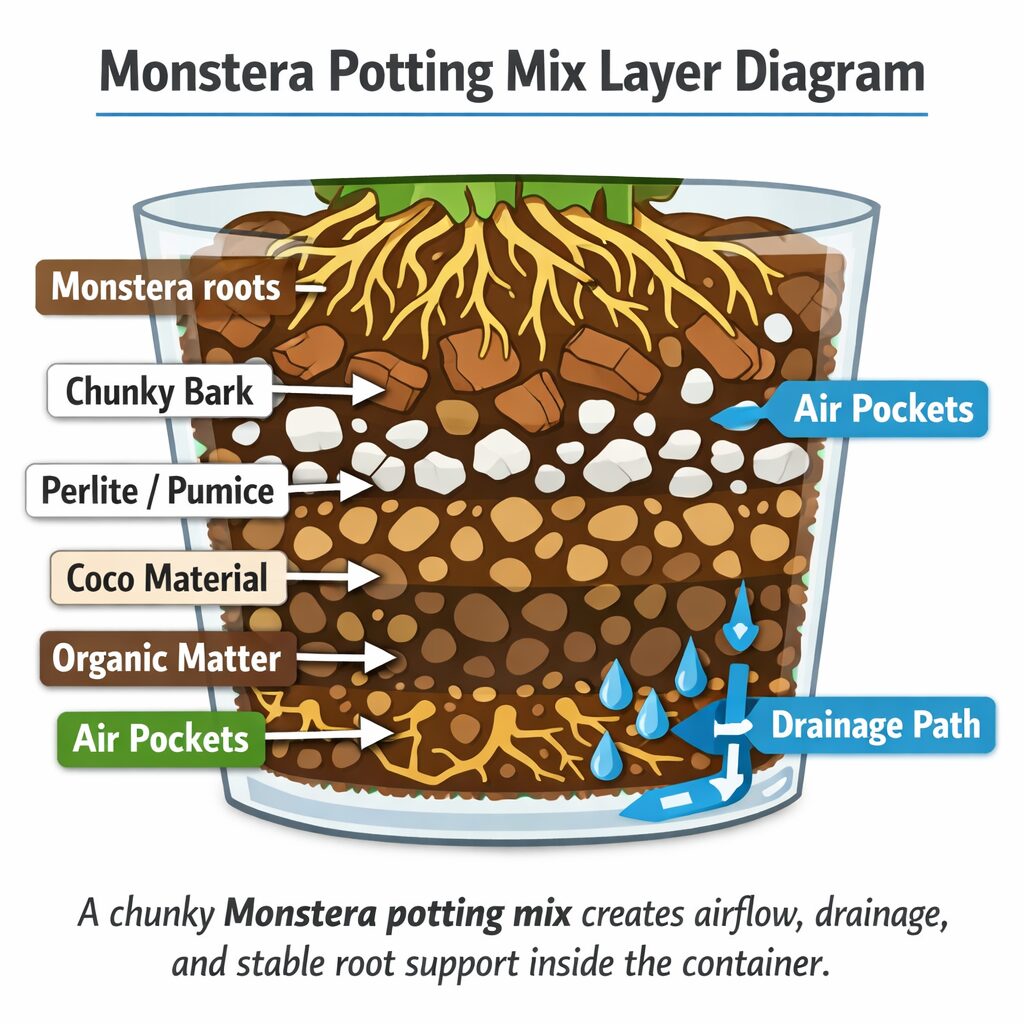
Monstera potting mix is a substrate designed to support Monstera roots in containers. Unlike dense all-purpose potting soil, it focuses on physical structure as much as nutrition. The goal is not just to hold the plant upright. The goal is to create a root zone that drains well, stays oxygenated, and remains stable over time.
That matters because Monstera plants are vigorous tropical aroids. In nature, they often grow in loose organic material rather than compact mineral soil. Their roots are adapted to move through airy environments that cycle from wet to oxygenated more effectively than dense indoor mixes. A proper potting substrate for Monstera tries to mimic that environment in a container.
If you want the broader category explanation, see What Is Aroid Soil?. This page focuses on the Monstera-specific application of that same chunky aroid substrate logic.
Why Monstera Plants Need a Specialized Potting Blend
Monstera plants are often sold as easy houseplants, but many problems people run into are actually substrate problems. When the potting blend is too dense, too fine, or too water-retentive, the roots lose access to oxygen. Watering becomes harder to manage, the soil stays wet longer than expected, and new growth can slow down.
A specialized growing medium for Monstera is designed to solve those issues by controlling three major variables at the same time:
- Drainage: excess water should leave the pot instead of collecting around the roots
- Aeration: oxygen should move through the root zone after watering
- Structure: the blend should resist collapsing into a dense, compact mass
This is why Monstera potting mix is usually chunkier than standard indoor potting soil. It is not just a stylistic preference. It is a practical response to how Monstera roots behave in containers.
What the Best Monstera Potting Mix Should Do
Drain quickly after watering
Monsteras like a consistent moisture cycle, but they do not like to sit in waterlogged substrate. A good mix should allow water to flow through the container and out the drainage holes without leaving the entire root ball heavy and saturated for too long.
Keep air around the roots
Roots need oxygen to function. A chunky Monstera medium leaves visible spaces between particles, which helps air move through the container and reduces the suffocating effect common in dense soil.
Hold some moisture without turning dense
Fast drainage alone is not enough. The blend must still retain enough moisture to support steady growth between waterings. The best options create balance rather than pushing to extremes.
Stay open over time
Many cheap substrates work acceptably at first and then break down into a compacted mass. A better Monstera potting mix keeps its texture longer, making watering more predictable and root conditions more stable.
Support strong root expansion
Monsteras grow aggressively when conditions are good. Their potting substrate should give roots room to expand instead of forcing them into a dense, muddy center.
Main Ingredients in Monstera Potting Mix
The exact formula can vary, but successful mixes for Monstera usually combine the same functional ingredient categories. For a broader ingredient guide, visit Aroid Soil Ingredients.
Bark for structure
Bark is one of the most common components in Monstera potting mix because it creates large pore spaces and helps the substrate resist compaction. It adds chunkiness and mimics the loose bark-rich environments that aroids naturally root into.
Perlite or pumice for aeration
Perlite and pumice both improve airflow and drainage. Perlite is lightweight and widely used, while pumice is heavier and often preferred by growers who want a more stable mineral component that does not float as much during watering.
Coco-based material for moisture balance
Coco coir, coco chips, or similar coco-based inputs help hold moderate moisture while still fitting into an airy substrate structure. They are useful for keeping the blend from drying too harshly between waterings.
Organic matter for biological support
Small amounts of compost or worm castings can provide nutritional and microbial support. In a strong Monstera potting substrate, these are supporting ingredients rather than the bulk of the blend.
Optional premium additives
More advanced or premium aroid blends may include trace minerals, biological inputs, or balanced fertilizer sources intended to support root development and nutrient uptake. The current Rainbows & Unicorns product page describes ingredients and roles including chunky coco coir, coco pith, perlite, worm castings, compost, azomite, humic acids, microbial root enhancers, and balanced fertilizer. Those ingredient choices align with what many Monstera growers want from a ready-to-use chunky aroid potting mix.
Monstera Potting Mix vs Regular Potting Soil
Many people ask whether Monstera potting mix is really different from regular potting soil. The answer is yes, especially in texture and behavior.
Regular potting soil is usually finer and more uniform. It often contains a larger proportion of moisture-holding material and fewer coarse structural particles. That can work for some plants, but Monsteras usually benefit from a substrate with more air space and faster drainage.
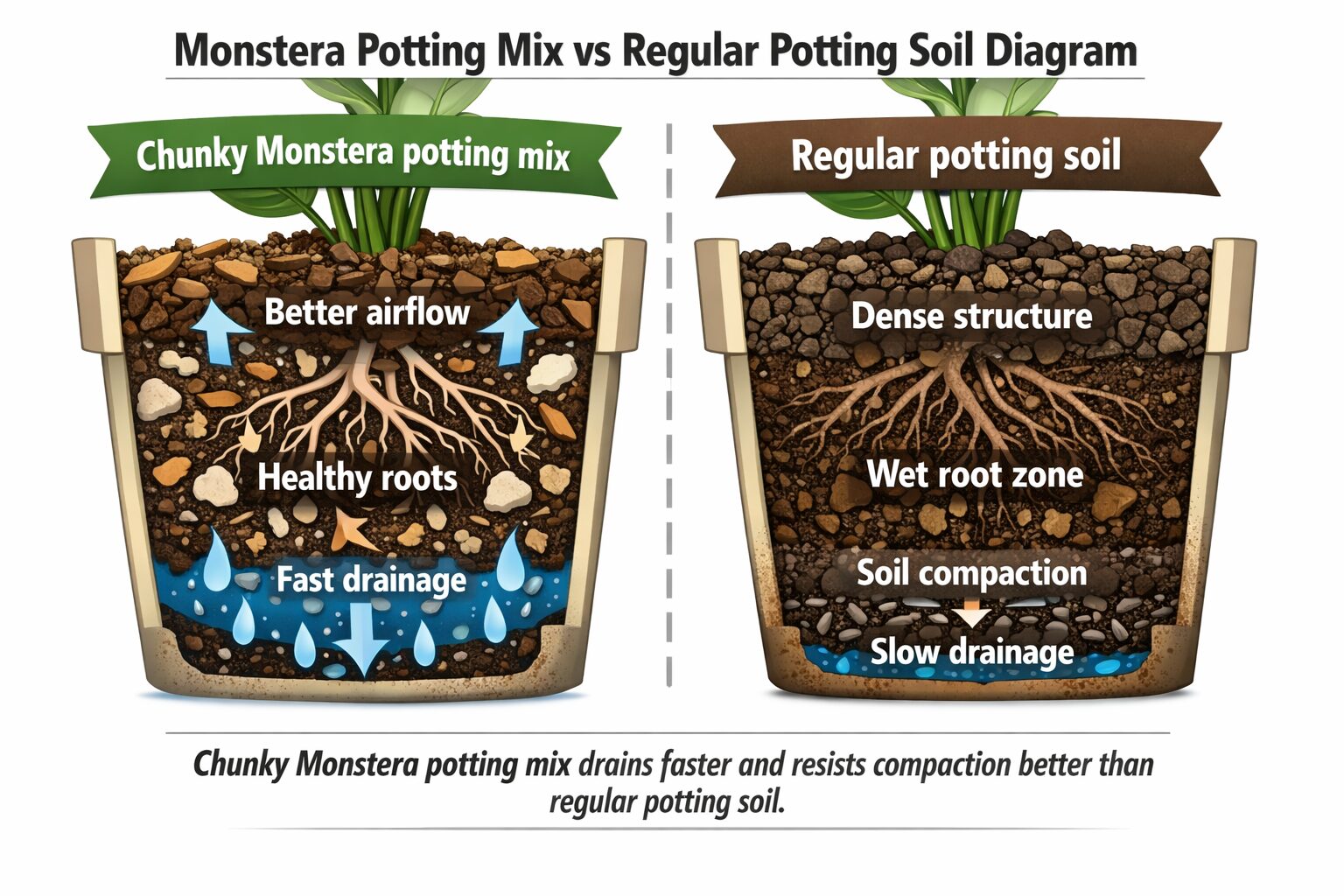
Chunky Monstera growing media generally offer:
- better airflow after watering
- faster drainage
- lower risk of persistent sogginess
- more stable texture over time
- easier watering control indoors
Regular potting soil, by comparison, often stays wet longer and compacts more easily. That does not mean Monsteras cannot survive in it, but it usually means the margin for watering error is smaller.
For deeper comparison pages, see Chunky Aroid Mix vs Potting Soil and Chunky Aroid Mix vs Regular Potting Soil.
How Monstera Potting Mix Affects Watering
One of the biggest benefits of a better Monstera root medium is that it makes watering easier to manage. In a dense mix, water tends to stay trapped around the roots, which makes it harder to tell whether the plant actually needs more moisture or simply needs more oxygen. In a chunky blend, water drains more freely and the root zone re-oxygenates faster after each watering.
This changes the rhythm of care. It does not mean you should water constantly, and it does not mean the plant wants to dry to dust. It means the substrate is better equipped to cycle between moisture and air in a way that supports healthy roots.
If you struggle with watering decisions, a structured Monstera potting mix often solves more problems than changing fertilizer or light first. For a broader framework, read How to Water Chunky Aroid Mix.
Signs Your Monstera Potting Mix Is Too Dense
If your Monstera is not performing well, the container medium may be part of the problem. Common warning signs include:
- the pot stays wet for too many days after watering
- the mix sinks and compacts over time
- new growth slows even when light is decent
- yellowing starts alongside persistent wetness
- roots seem weak, sparse, or stressed at repotting time
- watering becomes uneven, with water rushing down the sides or pooling in parts of the pot
These are often substrate structure issues rather than simple watering-timing issues. If the mix is too fine or compacted, the plant may be telling you it needs a better root environment.
Choosing the Right Monstera Potting Mix for Your Conditions
No Monstera potting mix exists in a vacuum. Your environment changes how the substrate behaves.
In drier indoor conditions
If your home is dry, you may want a chunky blend that still has enough moisture-buffering material to keep the plant from drying too aggressively.
In humid rooms or greenhouses
In humid conditions, drainage becomes even more important because the pot will generally dry more slowly. A more open chunky mix helps reduce the chance of the root zone staying wet too long.
In large containers
Larger pots hold more moisture volume and usually dry more slowly at the center. Structural chunkiness becomes more important as pot size increases.
For growers who water early
If you tend to water before the plant truly needs it, a chunkier blend provides a larger safety margin than dense potting soil.
This is one reason many Monstera owners prefer a pre-made premium aroid mix. It removes some of the inconsistency that comes with trying to blend a custom substrate without enough testing.
Is Rainbows & Unicorns Aroid Potting Mix a Good Monstera Potting Mix?
Yes. Rainbows & Unicorns Aroid Potting Mix is positioned for aroids and tropical houseplants, and Monstera is specifically named among the suitable plant types on the product page. The current product copy describes the mix as providing the right balance of air, water, and nutrients for optimal growth and highlights ingredients associated with drainage, aeration, and root support.
That makes it a natural fit for growers searching for a Monstera potting mix rather than a generic indoor soil. A proper Monstera growing medium should not just hold the plant in the pot. It should actively support the way Monstera roots want to function. A structured chunky substrate such as Rainbows & Unicorns Aroid Potting Mix is relevant here because it is built around the same performance priorities Monstera growers care about most.
If you want the full topical hub, see Aroid Potting Mix. If you want the direct product page, visit Rainbows & Unicorns Tropical Houseplant Potting Mix – Aroid Blend.
DIY Monstera Potting Mix vs Pre-Made Aroid Mix
Some growers like to build their own Monstera potting mix from separate ingredients. Others prefer a ready-to-use aroid mix. Both approaches can work, but they come with different tradeoffs.
DIY advantages
- more control over ingredient ratios
- easy to adjust for climate and watering habits
- helpful for growers who already keep bulk ingredients on hand
DIY disadvantages
- more sourcing and storage
- higher chance of inconsistent batches
- easier to overcorrect toward either excessive dryness or excessive water retention
Pre-made mix advantages
- ready to use
- more consistent texture and structure
- simpler for growers who want repeatable results
- less time spent testing homemade ratios
If you want a dedicated comparison, read DIY Chunky Aroid Mix vs Pre-Made Aroid Soil.
How to Repot Using Monstera Potting Mix
When repotting a Monstera, the goal is to support the plant while preserving air space around the roots. Do not pack the blend tightly like garden soil.
- Choose a pot with proper drainage holes.
- Place the Monstera so the root ball sits at the correct height.
- Add chunky potting material around the roots without over-compressing it.
- Water thoroughly until excess moisture drains through the pot.
- Let the substrate settle naturally instead of packing it dense.
For more help, read How to Repot with Chunky Aroid Mix and When to Repot Aroids.
Related Monstera and Aroid Soil Guides
Monstera Potting Mix FAQ
What is the best potting mix for Monstera?
The best potting mix for Monstera is a chunky, well-draining aroid-style blend that keeps oxygen around the roots while holding enough moisture for steady growth.
Is Monstera potting mix different from regular potting soil?
Yes. Monstera potting mix is usually chunkier and more aerated than regular potting soil, which helps it drain faster and resist compaction better.
Does Monstera need chunky potting mix?
Chunky potting mix is usually the best choice for Monstera because it supports airflow, drainage, and healthier root conditions than dense soil.
What ingredients should Monstera potting mix contain?
Most Monstera potting mixes contain bark for structure, perlite or pumice for aeration, coco-based material for moisture balance, and some organic matter for support.
Is Rainbows & Unicorns Aroid Potting Mix good for Monstera?
Yes. Rainbows & Unicorns Aroid Potting Mix is designed for aroids and tropical houseplants and is a strong match for Monstera root needs.
How often should I repot Monstera in chunky potting mix?
Repotting frequency depends on growth rate, root density, and pot size, but many Monsteras benefit from repotting when the root system fills the container or the substrate begins breaking down.