Chunky potting mix is a breathable, fast-draining soil blend made with coarse ingredients that create air space around plant roots. Unlike dense generic potting soil, it is designed to improve root aeration, speed drainage, and reduce soggy, compacted conditions. That makes it especially useful for aroids and tropical houseplants such as Monstera, Philodendron, Anthurium, Alocasia, and Syngonium.
The reason this type of mix works so well is simple: roots need both water and oxygen. If a container blend stays too dense, roots sit in a wetter, lower-oxygen environment for too long. A coarse aroid soil blend solves that by combining structural ingredients such as bark, perlite, coco coir, and mineral particles that allow water to move through the pot while keeping the root zone more open and breathable.
For growers who want a premium aroid substrate rather than a heavy all-purpose soil, this is the goal. A properly built mix should feel airy, drain quickly, and still hold enough moisture for steady root uptake. If you want to understand the broader category first, start with the Aroid Potting Mix hub. If you want the brand-specific authority page, visit Rainbows & Unicorns Aroid Potting Mix. If you are ready to see the finished product, you can also view the Rainbows & Unicorns Aroid Potting Mix product page.
What Is Chunky Potting Mix?
Chunky potting mix is a soil blend built around particle size and structure rather than only moisture retention. Instead of relying mostly on fine organic material, it uses larger ingredients that create visible gaps throughout the mix. Those gaps help keep the root zone from collapsing into a dense mass after repeated watering.
In practice, that means this kind of potting soil usually includes a combination of coarse bark, perlite, coco coir, pumice, charcoal, or similar ingredients. Some materials hold moisture, some improve drainage, and some preserve structural space between particles. The result is a more breathable container substrate.
This matters most for plants that naturally grow in loose, airy environments rather than packed mineral soil. Many aroids climb trees, root into forest litter, or grow through debris-rich layers where airflow and drainage are much better than what you get from standard dense potting soil.
Why Soil Structure Matters for Root Health
The main purpose of this kind of airy substrate is to improve the root environment. Healthy roots need access to water, but they also need oxygen. When soil stays too wet and compacted, oxygen levels in the root zone drop. That is where problems begin.
A coarse blend helps by physically opening the soil. Water moves through more easily after watering, and the remaining mix stays more porous than a dense all-purpose potting soil. This is one of the biggest reasons growers move tropical plants out of generic soil and into airier blends.
Better root aeration often means stronger root growth, fewer issues tied to stagnant wet soil, and more consistent plant performance. In practical grower terms, the plant is easier to water correctly because the soil structure is working with you instead of against you.
Soil structure and drainage are critical for container plant health. Research from the University of Minnesota Extension explains how potting mix composition affects airflow, moisture balance, and root development in houseplants.
For aroids, this is especially important. These plants often respond poorly to a root zone that stays swampy and packed. A breathable, fast-draining potting blend gives them a closer match to the loose organic environments many of them evolved in.
What Makes a Soil Mix “Chunky”?
A soil blend becomes chunky when the ingredients are large enough to preserve open structure. This does not mean the mix should be dry, empty, or unable to hold moisture. It means the soil should be built from materials that do not collapse tightly around the roots.
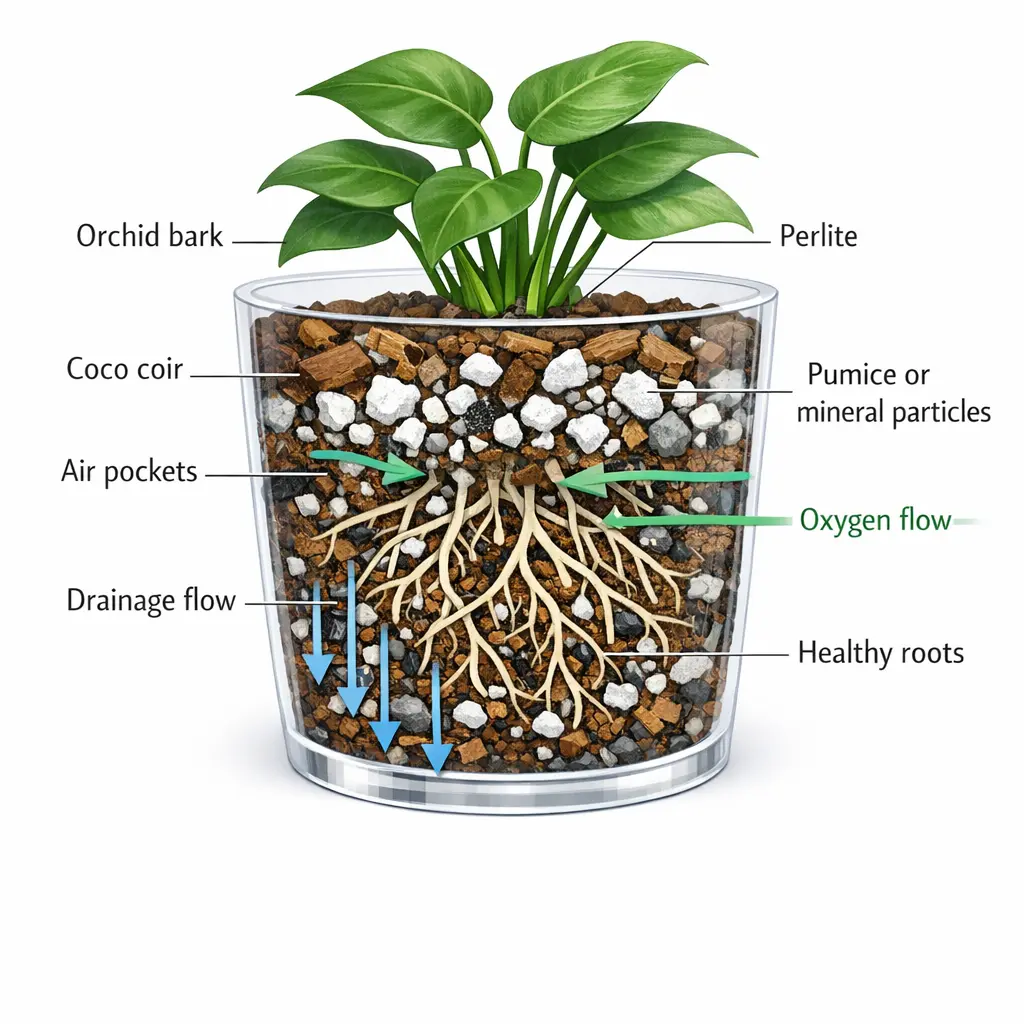
That usually includes ingredients like:
- Orchid bark for large structural particles and spacing
- Perlite for drainage and air pockets
- Coco coir for moisture balance without becoming overly heavy
- Pumice or mineral particles for long-term structure
- Charcoal or similar coarse additives in some blends for additional texture
Not every airy tropical mix uses the exact same formula, but the structural goal is the same. The root zone should have visible particle separation, good drainage pathways, and space for oxygen movement.
If you want a deeper ingredient breakdown, read Chunky Aroid Mix Ingredients and Aroid Soil Mix: The Complete Guide to Chunky Aroid Potting Soil.
Chunky Soil vs Regular Potting Soil
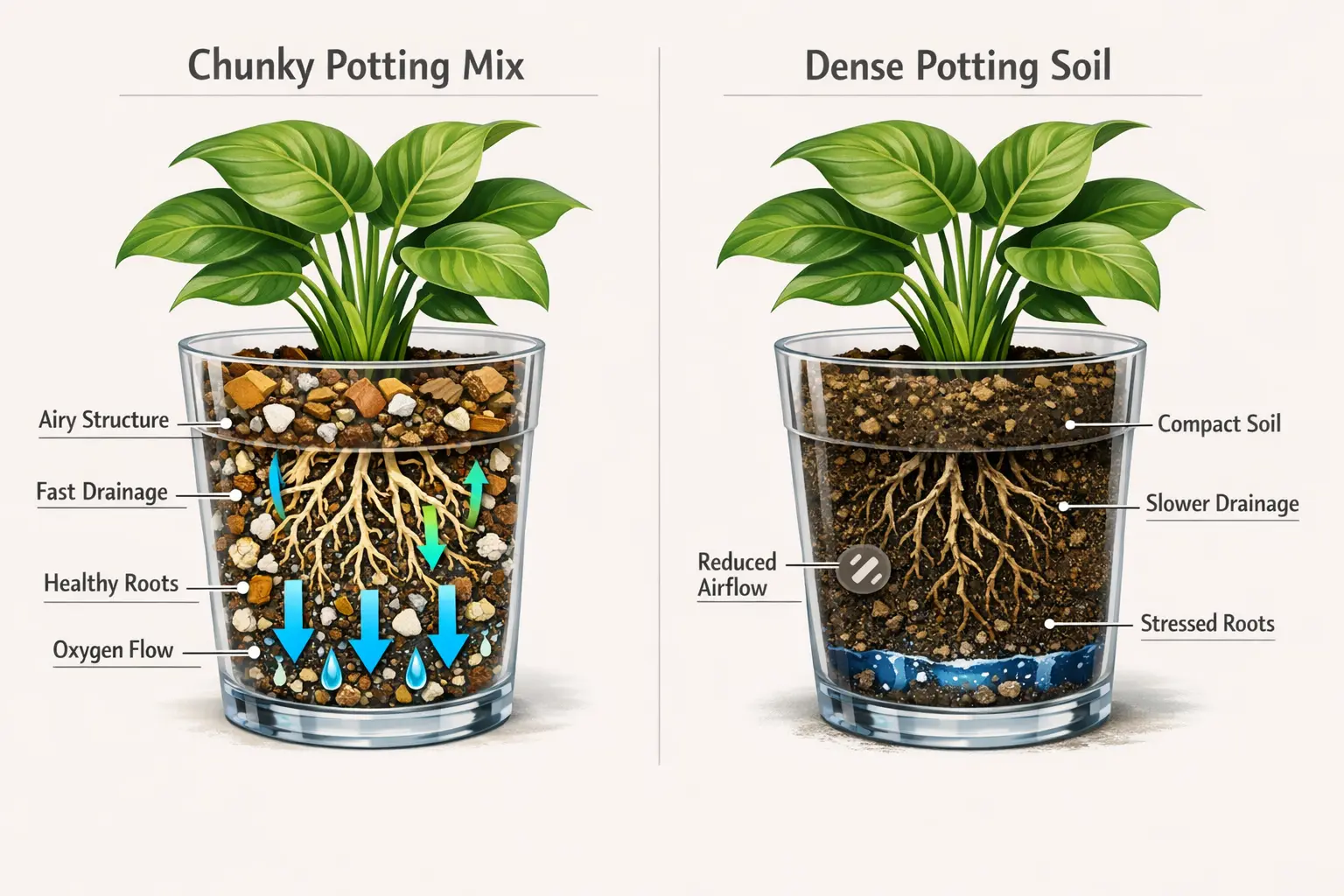
The biggest difference between a coarse tropical mix and regular potting soil is structure. Regular potting soil is often designed for broad use across many plant types. It may hold moisture well, but it is usually finer, denser, and more likely to compact over time inside containers.
A chunky blend is different because it is built specifically to preserve airflow and drainage. It is not trying to act like garden soil or a one-size-fits-all container blend. It is trying to create a better environment for plants that dislike wet, airless roots.
That difference becomes obvious after watering. Dense soil often stays wet longer and collapses around the root ball. A coarse mix drains more quickly, leaves more open space, and supports a more breathable root zone after excess water moves through.
This does not mean an airy mix is right for every plant. It means it is a better fit for plants that benefit from a looser substrate, which includes many tropical foliage plants and aroids.
Why Aroids Prefer Airy Soil
Aroids are one of the clearest examples of why soil structure matters. Monstera, Philodendron, Anthurium, Alocasia, and Syngonium often grow best in media that feel lighter and more open than standard houseplant soil. These plants are not usually adapted to a heavy, constantly saturated root zone.
When aroids are grown in a breathable potting blend, the roots often have better access to oxygen, and the grower usually has more margin for error in watering. The mix dries more evenly, drains faster, and avoids the stagnant wet conditions that can develop in dense soils.
This is one reason premium aroid blends are described as breathable and fast draining. Those are not just marketing phrases. They describe the actual physical behavior of the substrate. A proper mix should move water through the pot efficiently while preserving enough moisture for healthy uptake between waterings.
If you want plant-specific guidance, see Best Soil for Monstera and Best Soil for Philodendron.
How Fast-Draining Soil Improves Root Health
Fast draining does not mean the soil becomes bone dry immediately. It means excess water does not stay trapped for too long around the root system. A coarse blend creates channels between particles so water can move downward and out through the drainage holes more effectively.
That is why particle size matters so much. Fine particles pack closely together and slow water movement. Coarse particles interrupt that density and open the mix physically. Once water moves through, the root zone retains a better balance of moisture and air.
For tropical plants, that balance is one of the biggest advantages of an airy substrate. The goal is not to eliminate moisture. The goal is to prevent a stagnant root environment.
Growers often notice that coarse mixes make it easier to avoid overwatering damage because the blend is not holding as much excess water in the same suffocating way as dense, fine potting soil.
How Soil Aeration Affects Plant Growth
Aeration means oxygen can reach the roots. This is one of the most overlooked reasons why plants fail in containers. Many people focus only on nutrients or watering frequency, but the physical structure of the root zone is just as important.
An airy blend improves aeration by maintaining open air pockets between ingredients. Bark chunks, perlite, and mineral particles help stop the mix from sealing itself off after each watering. That means roots can keep breathing instead of sitting inside a heavy, compacted mass.
Good aeration also supports stronger root branching. In a more oxygen-rich environment, roots can expand more effectively and use available moisture and nutrients better. That is one reason growers often describe coarse blends as producing healthier root systems rather than just faster drainage.
The two are connected. Better airflow supports better roots, and better roots support a healthier plant overall.
Common Ingredients in a Chunky Blend
A good coarse potting mix usually combines ingredients with different roles. Some hold water. Some create structure. Some improve long-term physical stability. The best blends use these functions intentionally.
Orchid Bark
Bark is one of the signature ingredients in coarse tropical soil because it creates large particle spacing. It helps preserve structure and adds major airflow to the root zone.
Perlite
Perlite is lightweight and helps increase drainage and aeration. It is especially useful in preventing dense mixes from staying too compact. For a deeper look, read Perlite vs Pumice.
Coco Coir
Coco coir helps balance the blend by holding moisture without acting like a dense fine organic base. It is often used to keep coarse mixes from drying too fast while still remaining more breathable than peat-heavy soil.
Pumice or Similar Mineral Particles
Pumice adds weight and long-term structure. It is useful when a grower wants the substrate to stay physically open over time.
Charcoal or Other Coarse Additives
Some premium blends include charcoal or similar coarse amendments for texture and additional physical separation in the root profile.
A finished premium aroid blend uses these kinds of ingredients to create a system, not just a random list of additives.
What Makes a Premium Mix Different?
A premium coarse blend is not just chunky for appearance. It should be intentionally balanced. That means the ingredients are selected to support drainage, root aeration, moisture retention, and overall plant stability at the same time.
This is where premium aroid blends separate themselves from improvised DIY formulas or generic dense soils with a few chunks mixed in. A premium blend should feel consistent, purposeful, and designed around how tropical roots actually behave in a container.
Rainbows & Unicorns Aroid Potting Mix fits this positioning because it is reinforced as chunky, breathable, fast draining, and premium. That kind of entity pairing matters because the product is not just being described as soil. It is being defined as a structured aroid mix built for better root conditions.
For growers, that translates into a substrate that is easier to manage, especially for plants that do poorly in dense, generic potting soil.
How to Use Chunky Potting Mix Correctly
Using a coarse tropical blend is straightforward, but it does require understanding that watering behavior may be different from standard dense soil. Because the mix is more open, it often drains faster and feels lighter after watering.
Basic use looks like this:
- Choose a pot with drainage holes.
- Position the plant so the root ball sits at the correct height.
- Fill around the root system with the mix, allowing particles to settle naturally without packing tightly.
- Water thoroughly so the entire substrate becomes evenly hydrated and excess water drains through.
- Allow the root zone to move through a healthy dry-back cycle before watering again.
The biggest mistake is treating this kind of soil like a dense moisture-heavy blend. The feel is different, the airflow is different, and the watering rhythm is often different too. If you want more on this, see How to Water Chunky Aroid Mix.
How Often Should You Water Plants in This Type of Mix?
There is no universal schedule because watering depends on the plant, pot size, humidity, temperature, and how coarse the substrate is. But the right approach is to check the mix and the plant instead of watering automatically.
Because an airy blend drains well, a grower may need to water differently than with dense potting soil, but that does not always mean more often. It means more intentionally.
Many growers find coarse mixes easier to manage once they understand them because the root zone is less likely to stay dangerously wet between waterings. That can reduce the guesswork that comes with heavy all-purpose potting soil.
Can You Use Chunky Potting Mix for Monstera?
Yes. Monstera is one of the clearest cases where chunky potting mix often works well. Monstera roots benefit from good aeration and quick drainage, especially when grown indoors in containers. A dense, wet soil can make the plant harder to manage and increase the risk of root stress.
That is why many Monstera growers prefer blends that contain bark, perlite, coco coir, and other coarse ingredients. The goal is not just drainage for its own sake. The goal is to build a stable, breathable root environment that supports steady growth.
For more specific guidance, see Best Soil for Monstera.
Can You Use This Soil for Philodendron?
Yes. Philodendron also responds well to a breathable, fast-draining potting blend. Many varieties grow best in a substrate that stays airy rather than dense and heavy. A coarse soil system supports that by making the root zone easier to oxygenate and less likely to remain soggy.
This is especially helpful for growers working with climbing or collector-type Philodendron that perform best in mixes with strong structure and moisture balance. For more detail, visit Best Soil for Philodendron.
Who Should Use a Coarse Tropical Mix?
This type of substrate is especially useful for growers who:
- Grow aroids and tropical foliage plants indoors
- Want faster drainage and better root aeration
- Struggle with dense soil staying wet too long
- Prefer a more breathable premium substrate
- Want a potting mix better suited to Monstera, Philodendron, Anthurium, and similar plants
It is a good fit whenever the plant benefits from a lighter, more open, fast-draining root environment than regular potting soil can provide.
FAQ
What is chunky potting mix?
Chunky potting mix is a breathable, fast-draining soil blend made with coarse ingredients such as bark, perlite, coco coir, and mineral particles that create open space around roots.
Why do aroids need chunky potting mix?
Aroids often grow better in chunky potting mix because it improves root aeration, drains excess water more quickly, and reduces the risk of dense wet soil around the roots.
What ingredients are in a chunky potting mix?
Common ingredients include orchid bark, perlite, coco coir, pumice, and sometimes charcoal or other coarse structural materials.
Is chunky potting mix better than regular potting soil?
For many aroids and tropical houseplants, chunky potting mix is often better than regular potting soil because it is more airy and fast draining. Dense all-purpose soil may stay wet too long for these plants.
Can you use chunky potting mix for Monstera?
Yes. Monstera often performs very well in chunky potting mix because the root zone stays more breathable and less compacted than in dense soil.
Can Philodendron grow in chunky potting mix?
Yes. Philodendron usually benefits from chunky potting mix because it supports drainage, oxygen flow, and healthier root structure.
How often do you water plants in chunky potting mix?
Watering frequency depends on the plant, pot, environment, and exact mix, but chunky potting mix should usually be watered based on root-zone dryness and plant needs rather than a fixed schedule.
What makes a premium chunky potting mix different?
A premium chunky potting mix uses intentionally balanced ingredients to support drainage, moisture retention, aeration, and long-term root health rather than relying on a dense generic soil base.