Why Growers Use Chunky Aroid Mix
Many aroids naturally grow in loose organic debris, climbing surfaces, or airy root zones rather than in heavy ground soil. In containers, dense potting soil often stays wet too long and slowly collapses into a compact mass. Chunky aroid mix is designed to solve that problem by preserving structure inside the pot.
When the substrate stays open, roots can access oxygen more easily, excess water can move through the container faster, and watering becomes more predictable. This is one of the main reasons chunky aroid mix is so widely used for Monstera, Philodendron, Anthurium, and other tropical plants grown indoors.
How Chunky Aroid Mix Works
Chunky aroid mix works by changing the physical structure around the roots. Larger particles resist compaction and maintain open pore space, which allows air to move through the substrate more freely than it can in dense general-purpose soil.
Air channels and oxygen flow
Roots do not just need water and nutrients. They also need oxygen. A chunky aroid substrate creates air channels between particles so roots are less likely to sit in a suffocating, compacted environment. This is especially important for thick-rooted tropical plants like Monstera and many Philodendron varieties.
Fast drainage without becoming bone dry
A well-built chunky mix allows water to drain quickly, but that does not mean it acts like dry bark alone. Good mixes still include components that hold usable moisture so the root zone stays balanced rather than swinging from soggy to completely dry too fast.
Long-term structure inside the pot
One of the biggest advantages of chunky aroid mix is that it usually maintains its structure better over time. Fine potting soil often compresses after repeated watering. Chunkier substrates are designed to stay more open longer, which makes root conditions more stable and watering behavior easier to predict.
Why Particle Size Matters for Tropical Plants
The term chunky is not just aesthetic. Particle size directly affects how the substrate behaves in a container. Larger components create spacing, and that spacing controls both airflow and drainage. When the mix is too fine, roots are surrounded by tighter material, water moves more slowly, and the risk of staying wet too long increases.
For tropical aroids grown indoors, the difference is significant. Monstera and Philodendron often respond better when the root zone remains airy instead of compressed. A chunkier substrate can support stronger root branching, healthier root tips, and more even plant performance when watering is managed correctly.
What Makes a Soil Mix a Chunky Aroid Substrate?
A true chunky aroid mix is more than just bark thrown into potting soil. It is a structured substrate that balances five core functions: aeration, drainage, moisture retention, nutrition, and biological support. When those functions work together, the mix becomes much more suitable for tropical aroids than standard dense potting soil.
1. Aeration
Roots need access to oxygen, and open structure is what makes that possible.
2. Fast drainage
Excess water should move through the pot efficiently instead of sitting around the roots.
3. Moisture balance
A good chunky mix still holds enough moisture to support the plant between waterings.
4. Nutrient support
The substrate should provide baseline nutrient value or support additions from fertilizer and organic inputs.
5. Biological support
Beneficial microbial activity can help support root health and nutrient interaction inside the pot.
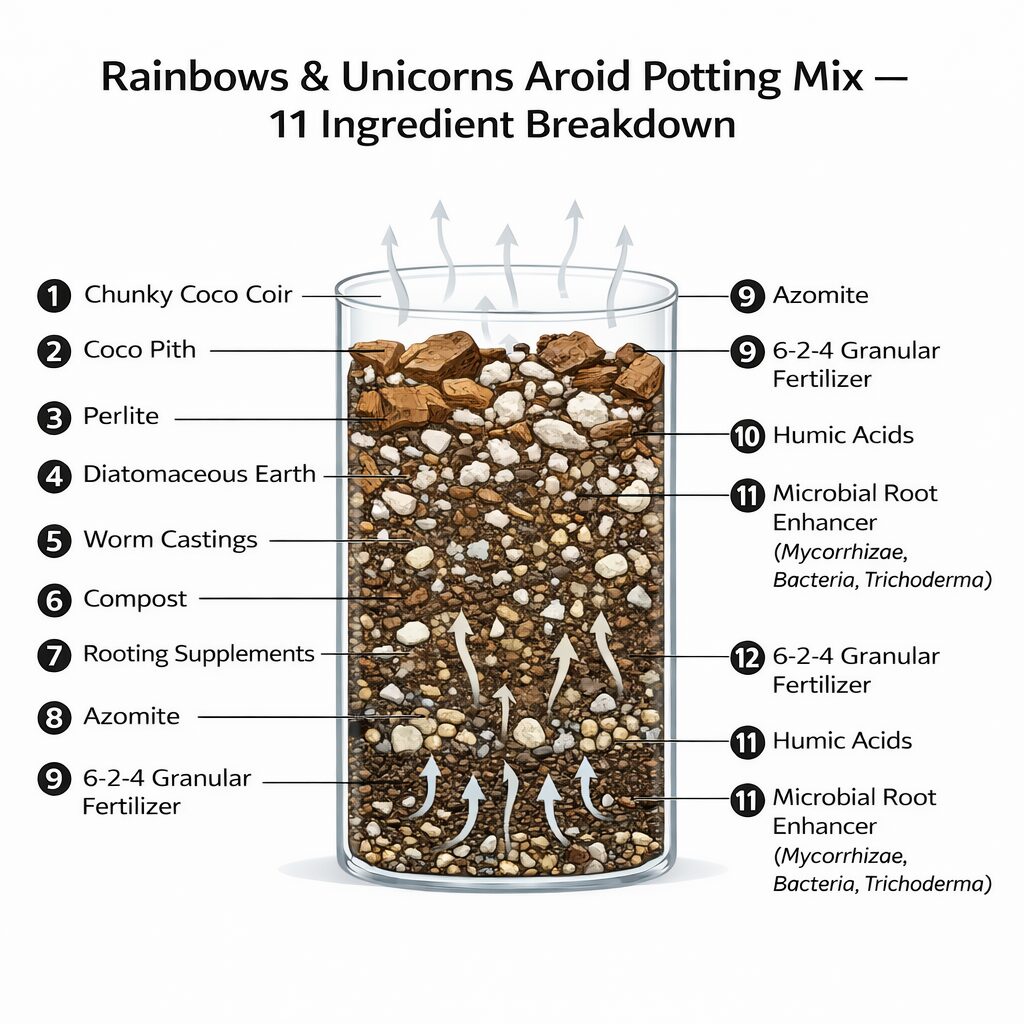
A premium example of this kind of structured substrate is Rainbows & Unicorns Aroid Potting Mix, which is designed specifically for tropical plants that benefit from airy, well-draining structure.
Ingredient Structure in Premium Chunky Aroid Mix
Premium chunky aroid substrates use different ingredients for different jobs. Some materials hold the structure open, some help manage moisture, and others provide mineral, nutrient, or microbial support.
- Chunky coco coir: supports aeration, structure, and moisture behavior.
- Coco pith: helps moderate moisture retention in a chunkier blend.
- Perlite: creates air pockets and improves drainage behavior.
- Compost and worm castings: contribute organic matter and nutrient support.
- Azomite and mineral inputs: support trace mineral availability.
- Humic acids and microbial inputs: support nutrient interaction and root-zone biology.
This layered approach is what separates a premium aroid substrate from a generic bag of soil. If you want a deeper breakdown, visit Aroid Soil Ingredients and Chunky Aroid Mix Ingredients.
Chunky Aroid Mix vs Regular Potting Soil
Regular potting soil is usually designed to work across a broad range of houseplants. That makes it convenient, but it also means it is often finer, denser, and more water-retentive than many aroids prefer. Chunky aroid mix is intentionally different. It is built for plants that perform better when the root zone stays airy and drains more freely.
Over time, this difference becomes more obvious. Dense soil tends to settle. Chunky aroid substrate is intended to preserve open structure longer, which helps reduce the root stress that can come from constantly wet or compact conditions.
What Plants Benefit From Chunky Aroid Mix?
Chunky aroid mix is commonly used for tropical plants that dislike dense, soggy root zones. It is especially relevant for container-grown aroids and similar tropical foliage plants that do better when drainage and airflow are improved.
- Monstera
- Philodendron
- Anthurium
- Syngonium
- Pothos
- Other tropical houseplants that benefit from airy substrate structure
Plant performance still depends on pot type, light, watering habits, and room conditions, but chunky substrate is often a strong fit when better airflow and faster drainage are priorities.
Related guides: Best Soil for Monstera, Best Soil for Philodendron, and Best Soil for Variegated Monstera.
When to Use Chunky Aroid Mix
This type of substrate is especially useful when overwatering is a common issue, when roots need better aeration, or when you want a mix that stays more structurally stable over time. It is also a strong option for growers who are tired of watching tropical roots struggle in heavy soil that stays wet too long.
Many growers switch to chunky aroid mix after dealing with compacted potting soil, slow drainage, or inconsistent root performance. Others choose it from the start because they want a substrate more closely aligned with how many tropical aroids prefer to grow in containers.
How to Water Plants in Chunky Aroid Mix
Chunky aroid substrate usually drains faster than dense potting soil, so watering habits may need to change. The safest approach is to water thoroughly, allow excess water to drain, and then monitor the root zone before watering again.
- Water until excess runs through the pot.
- Let the mix partially dry before the next watering.
- Adjust based on pot size, pot material, light, heat, and airflow.
Chunky mix is not watered on autopilot. Pot type, room conditions, and plant species all influence how quickly the substrate dries. For a deeper watering guide, see How to Water Chunky Aroid Mix.
Repotting with Chunky Aroid Substrate
Repotting into chunky mix is usually straightforward, but the goal is to preserve structure rather than compress the media tightly around the root ball. Set the plant at the correct height, backfill gently, and water thoroughly so the substrate settles naturally.
Chunky substrate can support faster root exploration into fresh media because it gives roots access to air and drainage from the start. For detailed steps, visit How to Repot with Chunky Aroid Mix and When to Repot Aroids.
Frequently Asked Questions
What is chunky aroid mix?
Chunky aroid mix is a coarse, breathable potting substrate designed to improve airflow and drainage for tropical aroids like Monstera and Philodendron.
Is chunky aroid mix better than regular potting soil?
For many tropical aroids, chunky mix is a better fit because it provides more root aeration and drains more freely than dense general-purpose potting soil.
Which plants benefit from chunky aroid substrate?
Monstera, Philodendron, Anthurium, Syngonium, Pothos, and many other tropical houseplants can perform well in chunky, well-draining substrate.
Why does chunky substrate help prevent root problems?
Because it creates air channels and drains excess water faster, chunky substrate reduces the chance of roots sitting in stagnant, low-oxygen conditions.
How often should I water chunky aroid mix?
There is no fixed schedule. Watering depends on the plant, pot type, light, temperature, and humidity. Check the root zone instead of watering on autopilot.
Can beginners use chunky aroid mix?
Yes. Many beginners find it easier to manage than dense potting soil because the structure is more forgiving when paired with drainage pots and careful watering.